
Replacing a pressure regulator should be stress-free, straightforward, and completely transparent from start to finish.
We take the guesswork out of plumbing repairs by keeping you informed every step of the way:
- Call us to schedule your free estimate.
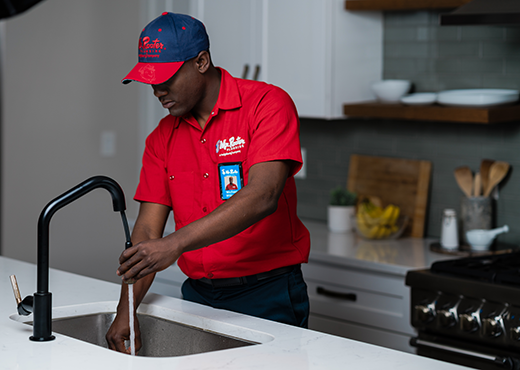
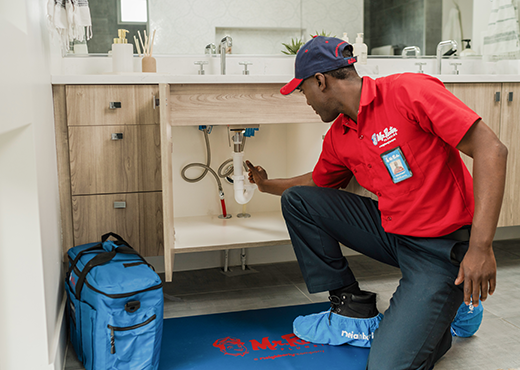
- Your technician tests your home's pressure and inspects the existing PRV.
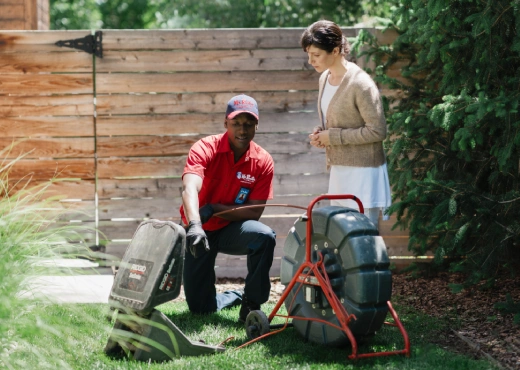
- We explain what we found and your replacement options in plain language.
- You choose how to move forward with clear, upfront pricing.
- We complete the replacement and test the result before we leave.
- We clean up the work area fully.
6 Signs Your Pressure Regulator Is Failing and How We Handle Them
Your home’s plumbing system relies on a steady balance to run smoothly, but a failing pressure-reducing valve (PRV) can quickly throw off that harmony. Because PRV issues can creep up without a clear warning, knowing what to listen to and look for can save you from costly water damage down the road.
Watch for these common warning signs:
- Sudden High Pressure or Banging Pipes: Loud hammering when a faucet shuts off often means your PRV is no longer holding pressure where it should.
- Gradual Loss of Pressure: A PRV that is failing closed can slowly choke off flow throughout the house.
- Fluctuating Pressure Between Hot and Cold: Uneven pressure between fixtures can point to a regulator that is no longer holding steady.
- Hissing Near Your Main Shutoff: A hissing sound close to the PRV usually means it is struggling to manage the pressure differential.
- Leaking Around the Valve Body: Visible moisture at the regulator itself is a sign it needs to be replaced, not adjusted.
- An Unexplained Rise in Your Water Bill: Excess pressure can waste water through small leaks you would otherwise never notice.
If you are noticing any of these red flags, do not wait for a pipe to leak or burst.
Schedule your free pressure inspection today to have our friendly local experts check your system before small signs turn into major repairs.
Why Pressure Regulators Fail in Columbus Homes
Understanding why your plumbing system wears down can help you protect your home before minor issues become major headaches. Most pressure regulators are rated to last around 10 to 15 years, but local environmental factors can shorten that lifespan significantly. Columbus’s hard water, drawn from the Scioto River and nearby groundwater, accelerates mineral buildup inside the valve long before then. Elevation differences across the Columbus area also mean some homes receive higher municipal pressure than others, putting extra strain on an aging PRV. In many older homes, the original regulator installed decades ago has simply never been replaced.
What Happens If You Don't Replace a Failing PRV
Ignoring a faulty PRV might seem harmless at first, but leaving high pressure unchecked places unnecessary stress on your entire plumbing infrastructure.
Over time, that constant stress leads to preventable expenses and avoidable damage around your home:
- Stress on Pipe Joints: Constant high pressure strains fittings and connections, increasing the odds of a leak or a burst pipe.
- Shortened Appliance Life: Water heaters, washing machines, and ice makers all wear out faster under excess pressure.
- Higher Water Bills: Small leaks caused by pressure stress add up over time.
- Water Heater Strain: Excess pressure can trigger your water heater's relief valve to release water more often than it should.
Ready to protect your pipes, appliances, and water bill? Contact our expert team now to get your hassle-free estimate and enjoy complete peace of mind.