- A sewage smell in your basement usually comes from a dry P-trap allowing sewer gases to escape.
- Blocked roof vents can trap odors inside your home instead of venting them safely outside.
- Persistent odors often indicate a cracked or bellied sewer main line requiring professional repair.
A sewage smell in basement spaces requires immediate attention to protect your health and comfort. If your basement smells like sewage, the culprit is typically escaped sewer gases from dried-out fixtures, clogged vents, or a failing main line. Our team of experts from Mr. Rooter Plumbing® of Denver frequently resolves these odor issues for local homeowners. We prioritize giving you straightforward answers and effective solutions so you can enjoy a fresh and safe home. According to the Environmental Protection Agency, indoor air pollutants can be significantly higher than outdoor levels, making fast odor resolution critical for your well-being. Let us explore the common causes and exactly how we can fix them.
Check These Quick Fixes First
Before assuming the worst, you can investigate a few simple issues that cause bad odors.
- Run water to fix a dry P-trap. The P-trap is the curved pipe under your sink or floor drain designed to hold a small amount of water. This water creates a barrier that prevents sewer gases from rising into your home. If a drain goes unused for several weeks, this water evaporates. Pouring a gallon of water down your basement floor drains or unused sinks will restore the barrier and stop the smell.
- Clear blocked vents. Your plumbing system relies on vent pipes running to your roof to release sewer gases outside. Leaves, bird nests, or snow can block these pipes. When vents clog, the trapped gases are forced back down and out through your indoor drains. Clearing these roof vents restores proper airflow.
When Odors Indicate a Failing Sewer Main Line
If the simple fixes fail, a persistent sewage smell in basement areas often points to a damaged sewer main line. Your main line connects your home plumbing to the municipal sewer system. Here in Colorado, our homes sit on shifting bentonite soils. Bentonite clay expands when wet and shrinks when dry. This constant soil movement places immense stress on underground pipes.
Over time, the soil shifting causes pipe bellies to form. A pipe belly is a sagging section of the sewer line that pools water and waste instead of letting it flow away. The trapped waste decomposes and sends a constant stream of sewer gases back into your home. Fixing your underground lines quickly prevents further property damage and health hazards.
Expert Main Line Leak Diagnosis in Denver
Resolving a main line leak requires precise diagnosis and professional tools. We start with a Sewer Camera Inspection, which involves feeding a high-definition camera directly into your pipes. This allows us to visually pinpoint the exact location of cracks, bellies, or root intrusions without guessing. Seeing the problem first helps us recommend the most cost-effective and accurate Main Line Repair for your specific situation.
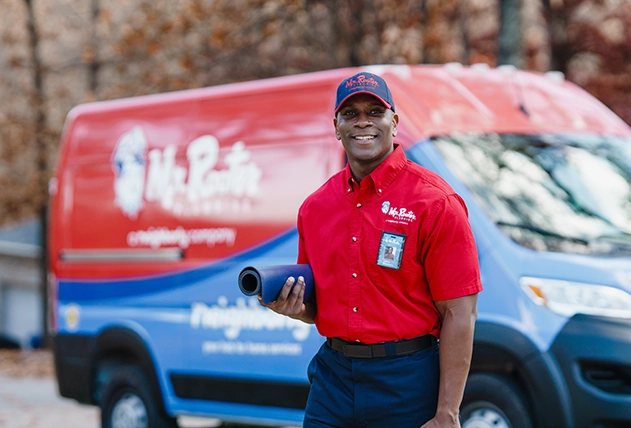
Sometimes, resolving a severe pipe belly or collapse requires targeted excavation to replace the broken sections. When we perform this service, our professionals arrive in clean uniforms and treat your property with the utmost respect. We utilize protective floor mats while walking through your home and conduct a thorough post-job cleanup before we leave. We back our work with the Neighborly Done Right Promise® so you can rest easy knowing the job is complete.
Stop living with foul odors and protect your property from hidden leaks. Contact us today to schedule your Sewer Camera Inspection and Main Line Service diagnosis.