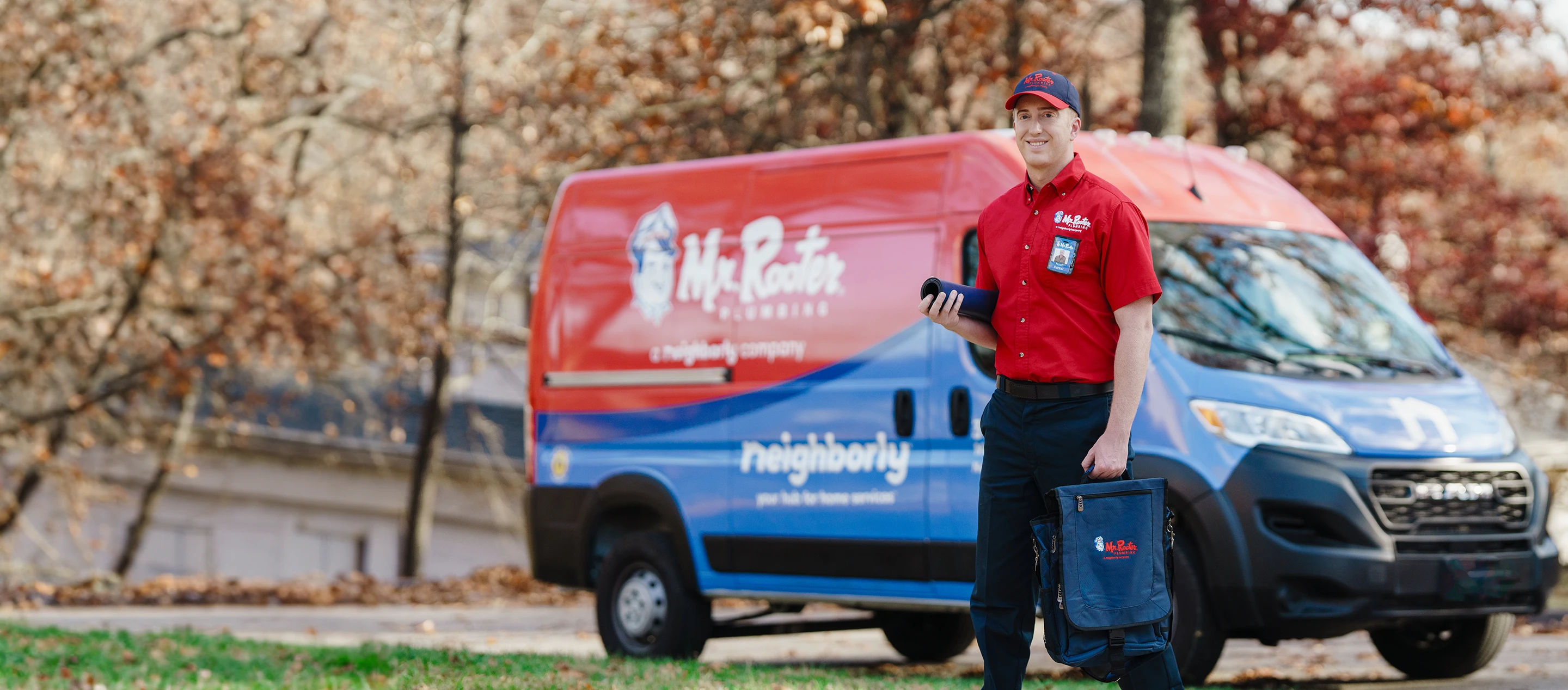
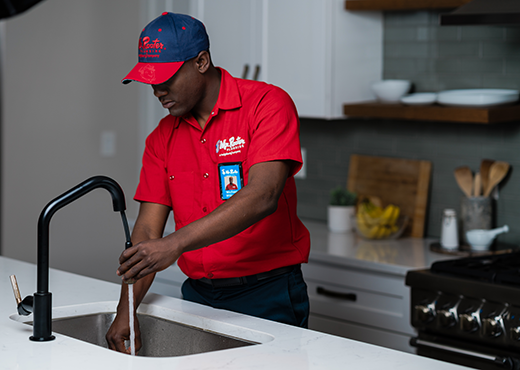
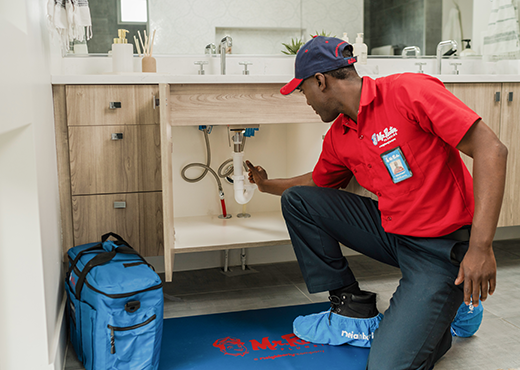
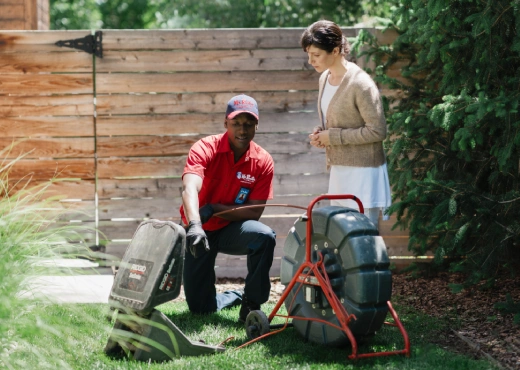
When you contact us for service, we start by asking what you are seeing, hearing, or smelling, and how long the problem has been happening. Those details help us arrive prepared with the right tools and parts to resolve the issue. Once we are on-site, we locate your main shutoff, cleanout, and any relevant access points before we start work.
If you are dealing with a clogged drain, we determine whether the blockage is at the fixture, in a branch line, or in the main by testing multiple drains and listening for where the gurgling or slow drainage originates. For sewer backups, we inspect through the cleanout first. This gives us the fastest path to diagnosis. If the line is clear from the cleanout to the street connection, the problem is likely on the municipal side. If we hit a blockage, we clear it and then recommend a camera inspection to confirm what caused it, especially if this is not the first time you have had the issue.
You watch the monitor with us during a camera run and see exactly what we are seeing. Roots. Breaks. Bellies. Grease buildup. Collapsed sections. We mark the location of any problem areas on the surface above using the camera locator. This matters if excavation or spot repair becomes necessary. Before we start any repair, you see the price. You approve the work. We complete the work, test the work, clean up, and walk you through what we did and what to watch for going forward. You get documentation. If the issue is covered by a warranty or our Neighborly Done Right Promise®, we make sure you understand how the protection works.
Comprehensive Plumbing Services for Glenside Homes and Businesses
From recurring clogs to major replacements, our locally owned and operated plumbing company helps with repairs, maintenance, and installations. These services protect your home long-term. If you are dealing with an emergency, we help you schedule service around the clock. Plumbing problems do not follow business hours.
Emergency Plumbing Services Available 24/7
If you need an emergency plumber in Glenside, we respond around the clock. Burst pipes, sewer backups, water heater failures, and frozen pipes do not wait for business hours. When you call, a real person answers the phone. We dispatch a licensed plumber to your home fast. We arrive with the tools and parts to handle most emergency plumbing repairs on the spot. You get back to normal as quickly as possible.
Sewer Line Repair and Replacement
A clogged or damaged sewer line affects multiple fixtures at once. The line brings wastewater back into your home through the lowest drains. Common causes include heavy buildup, root intrusion, and damaged pipe sections. When we run a camera through a sewer lateral, here is what we typically find in older Glenside homes.
- Tree roots breaking through at joints, appearing as white or brown tendrils hanging into the pipe
- Standing water in sections where the pipe should be sloped, meaning the line has bellied due to soil settlement
- Cracks or missing pieces of clay pipe where daylight is visible from outside
- Offset joints where one section has shifted relative to the next, creating a ledge where debris catches
If we see heavy root intrusion, clearing the line restores flow temporarily. Roots grow back within 18 to 24 months unless the damaged section is repaired or replaced. If the camera shows a single crack or offset joint and the rest of the line is in good shape, a spot repair or patch is the most cost-effective option. If we find multiple problem areas, a full sewer line replacement is the smarter long-term investment. You are not paying for repeat sewer repairs every few years.
Drain Cleaning and Clogged Drain Repair
If plunging works once but the clog keeps coming back, something is still restricting the line. Grease, soap residue, and hair coat the pipe walls, narrowing the drain over time. A cable leaves buildup behind. For stubborn or recurring blockages, we recommend HydroScrub drain jetting. This method uses high-pressure water to clean the inside of the line more completely.
When clogs repeat, a camera inspection helps confirm whether the cause is buildup, roots, or a damaged section. The damaged section needs repair instead of repeated clearing. One thing we see often is this. Homeowners assume a slow kitchen drain is grease. The camera shows a bellied section of pipe under the basement floor. The bellied section holds standing water and catches everything passing through. No amount of drain cleaner or snaking fixes a belly. The pipe needs to be re-sloped or replaced. If you are clearing the same drain every six months, look deeper.
Water Heater Installation and Replacement
Hot water problems come with warning signs. You might notice temperature swings, rusty-looking hot water, popping noises, or a small leak under the tank. If your water heater is more than 10 years old and you notice rusty water only from hot taps, the tank is corroding from the inside.
Most homeowners do not realize the anode rod inside the tank is designed to corrode rather than the tank lining. Once the rod is gone, the tank itself starts rusting. At this point, you are not fixing the heater. You are buying time until the heater fails. If you hear popping or rumbling noises, sediment buildup at the bottom of the tank is hardening and cracking as the burner heats the sediment. Flushing helps if caught early. If the noise is loud and the water is discolored, the damage is already done.
We provide water heater repair, replacement, and installation for tank and tankless models. Tankless models provide hot water on demand without the bulk of a storage tank. If you are experiencing cold showers or inconsistent temperature, we diagnose whether the issue is the heating element, thermostat, or sediment buildup. We explain what failed, what repair takes, and what replacement looks like if the unit is nearing the end of its service life. If you choose replacement, we make sure the install is done correctly and safely, including proper connections, venting, and discharge piping. Financing is available for water heater replacements and other larger plumbing projects.
Leak Detection and Pipe Repair
A leak is not always obvious. If your water bill jumps, you hear water movement when everything is off, or you see staining on ceilings or walls, a hidden leak may be the cause. Hidden leaks often originate from aging supply lines, corroded fittings, or cracked drainpipes behind walls. We locate the issue, explain what we find, and give you options for pipe repair. The options fit the condition of the surrounding plumbing. Fixing leaks early helps you avoid structural damage and more expensive restoration work later. A faucet dripping once per second wastes roughly 3,000 gallons per year. A running toilet wastes even more. Address small problems before they become big ones.
Water Line Repair and Replacement
The water line brings fresh water from the municipal main into your home. If you are experiencing low water pressure throughout the house, discolored water, or wet spots in your yard near the street, your water line is leaking or failing. Galvanized steel water lines, common in older Glenside homes, corrode and restrict flow over time. You might have great pressure at the street but weak flow at your kitchen faucet because the inside of the pipe has narrowed. We assess the condition of your water line and recommend repair or replacement based on the pipe material, age, and extent of damage. Water line work requires coordination with local authorities and proper permitting. We handle the entire process from start to finish.
Toilet Repair and Faucet Repair
A running toilet or dripping faucet seems minor until you see the water bill. A toilet running constantly wastes hundreds of gallons per day. Common causes include worn flapper valves, faulty fill valves, or a cracked overflow tube. We provide fast toilet repair to stop the waste and restore proper function. If the toilet is cracked, outdated, or needs frequent repairs, toilet replacement is often the smarter choice. For faucet repair, we fix drips, low water pressure at the tap, and temperature control issues. If the faucet is corroded or the internal cartridge is failing, replacing the faucet provides reliable performance and improved efficiency.
Sump Pump Installation and Repair
A sump pump protects your basement from flooding during heavy rain or the spring thaw. If your sump pump fails when you need it most, water damage happens fast. We provide sump pump installation for homes without basement drainage systems and sump pump repair for pumps running continuously, not kicking on, or making unusual noises. Test your sump pump every few months by pouring a bucket of water into the pit. The pump should activate within seconds. If the pump does not start or cycles on and off repeatedly, call us before the next storm.
Frozen Pipe Repair and Prevention
Pennsylvania winters put exterior wall pipes, crawl space lines, and unheated basement plumbing at risk. Frozen pipes block water flow. Worse, frozen pipes burst when ice expands inside the line. If you turn on a faucet and nothing comes out during cold weather, the line is frozen. We provide frozen pipe repair and thawing services. If the pipe has already burst, we handle the burst pipe repair and help you assess water damage. Prevention is simpler. Insulate vulnerable pipes, let faucets drip during extreme cold, and keep cabinet doors open under sinks on exterior walls so warm air reaches the plumbing.
Seasonal Plumbing Challenges in the Glenside Area
Pennsylvania winters bring freeze-thaw cycles, during which plumbing stress is predictable. Pipes in exterior walls, unheated crawl spaces, and older homes with minimal insulation are most vulnerable. If you have had a freeze once, it will happen again in the same spot unless you insulate the section or install heat-trace cable.
When temperatures drop below 20 degrees Fahrenheit for more than a day, let a cold water tap drip overnight in vulnerable areas to keep water moving through the line. If you are thawing a frozen section with a hairdryer, start at the faucet end and work back toward the frozen area. If you heat the middle first, steam pressure builds between the ice blockage and the closed faucet. The pipe cracks from expansion. Always open the faucet before you start thawing.
Spring thaw is when we see the most sump pump failures and basement flooding calls. Snowmelt overwhelms aging pumps and clogged weeping tiles that were ignored all winter. Test your sump pump in early March by pouring a bucket of water into the pit and making sure the pump kicks on within seconds. Fall is the time to disconnect outdoor hoses, shut off exterior hose bibs from inside, and drain the line, so freeze expansion does not crack the valve body. If you have mature trees near your sewer line, schedule a camera inspection in late summer or early fall. Root intrusion accelerates when roots seek water before winter dormancy. Catching root intrusion early means a routine clearing instead of an emergency sewer backup during the first heavy rain.
Water Pressure Problems and Solutions
Low water pressure throughout the house points to a supply line issue. If only one faucet has weak flow, the problem is usually a clogged aerator or a failing fixture valve. Clean the aerator first by unscrewing the faucet tip and rinsing the screen. If pressure remains weak after cleaning, the issue is deeper in the line. Corroded galvanized pipes, partially closed shutoff valves, or a failing pressure regulator all reduce flow. We diagnose water pressure problems by testing pressure at multiple points, inspecting visible supply lines, and checking for leaks or restrictions. If your water pressure suddenly drops or spikes, call us before the fluctuation damages appliances or fixtures.
Plumbing Inspection and Video Camera Inspections
A plumbing inspection gives you a clear picture of system conditions before problems become emergencies. We check visible pipes for corrosion and test water pressure. We inspect drains for slow flow, and look for signs of leaks or moisture damage. For sewer lines and main drains, video camera inspections show exactly what is happening inside the pipe.
The camera travels through the line and sends the live footage to a monitor. You see root intrusion, cracks, offset joints, grease buildup, and bellied sections in real time. The camera includes a locator, so we mark problem areas on the surface above. This documentation is essential for planning repairs, applying for permits, or filing insurance claims. If you are buying a home in Glenside built before 1970, a sewer camera inspection before closing protects you from costly surprises after the sale.
Commercial Plumbing Services
Plumbing problems in a commercial building disrupt business operations, create health hazards, and drive customers away. Our commercial plumbing team works with restaurants, offices, retail spaces, and property managers throughout the Glenside area. We handle routine maintenance, emergency repairs, and system installations for commercial properties. We understand the urgency of keeping your business running. We work efficiently to minimize downtime.
When to Call a Plumber in Glenside and When You Wait
Some plumbing problems need immediate attention. Others give you time to resolve. If you see water actively leaking near electrical panels, outlets, or appliances, shut off power to the affected area if you can do so safely, and call a plumber right away. If water is pooling under a water heater, do not wait. Tank failures dump 40 to 50 gallons in minutes. If multiple fixtures are backing up or you smell sewer gas throughout the house, treat this as a main-line issue and stop using water until a plumber inspects the system.
On the other hand, a dripping faucet, a toilet running occasionally, or a slow drain taking a few minutes are issues you schedule during normal hours. Even minor leaks waste water and drive up bills. Knowing the difference between an emergency and a maintenance issue helps you make smart decisions and avoid panic calls when a scheduled appointment would work fine.