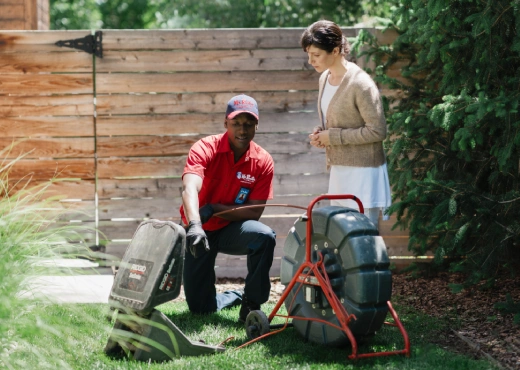
Our team members are also well-equipped with the skillset and know-how for advanced plumbing methods, including possessing some nifty tricks and tricks up their plumber sleeves. Although you can get rid of a clog with a plunger or auger, a water line replacement is a whole different ball game, as your generic store-bought equipment just won't do. A water line replacement is more detail-oriented than getting rid of a clog and requires specialized tactics such as the following:
Infrared Detection: One tool we use is infrared thermal imaging which helps to pinpoint leakages that may be affecting the quality of your home’s freshwater supply. Mostly, thermal imaging helps to exact target moist and humid areas by measuring temperature levels behind your walls, ceilings, and underneath the soil. After collecting data by calculating wavelengths, we create a heat map of the varying temperature zones within your pipes which shows the detailed patterns and variations. Your skilled plumber will indicate which areas have possible leaks or are damaged and require a traverse-city water line replacement.
Pressure Testing: If pressure levels have been unbalanced for your supply due to a frozen or busted pipe, you may have noticed a big difference during your daily shower. Our trained plumber will examine your pressure regulator to ensure it hasn’t been tampered with and the settings are at the standard and default mode. If you find you have lower pressure from your plumbing fixtures from your toilet to the bathroom sink it could be due to extensive damage to your liquid lines, which is only made worse if they are frozen out. After the plumbing inspection, our certified plumber will take a flow reading from the water meter and conduct a pressure test and any other backup methods to uncover any further damages to your water supply line.