Some toilets give plenty of warning. Others quietly soak the floor underneath them for a year before anyone notices.
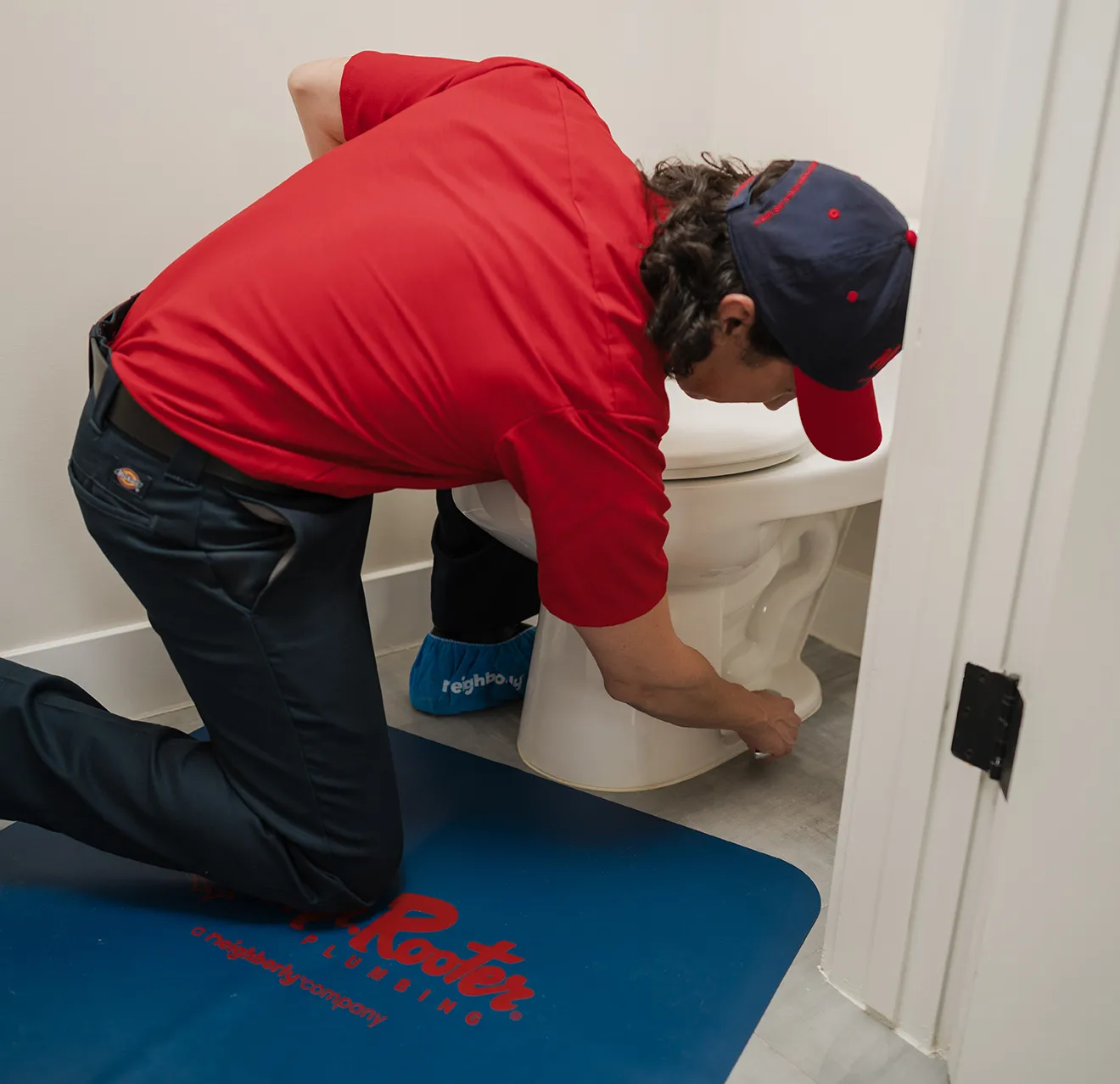
Here's what we look at when a homeowner in St. Clair, Union, or Washington asks whether to repair or replace. Cracks in the bowl or tank end the conversation. Porcelain doesn't patch, and a hairline crack in a tank can split open without warning. Constant clogs are another sign, especially on early low-flow toilets from the late '90s that never had the flushing power to clear a 3-inch trapway. And a wobble that comes back after we've tightened the bolts tells us the flange or the floor beneath it has moved.
Age and water use come next. Plenty of homes across Franklin County still have original 1970s and '80s toilets that use 3.5 gallons or more per flush. Trading one for a 1.28-gallon WaterSense model cuts that toilet's water use by more than half. On city water, you'll see it on the bill. On a septic system, it means less water moving through the tank and drain field every day.
A faulty toilet can also impact your floor. A failed wax seal rarely leaks enough to puddle, but over a year or two, seepage softens the subfloor around the flange, and by the time you notice it, you'll need subfloor repairs. If you've spotted a brown stain on the ceiling below an upstairs bathroom, call before it spreads.
We'll give you a straight answer on repair versus replacement, with a price for each.