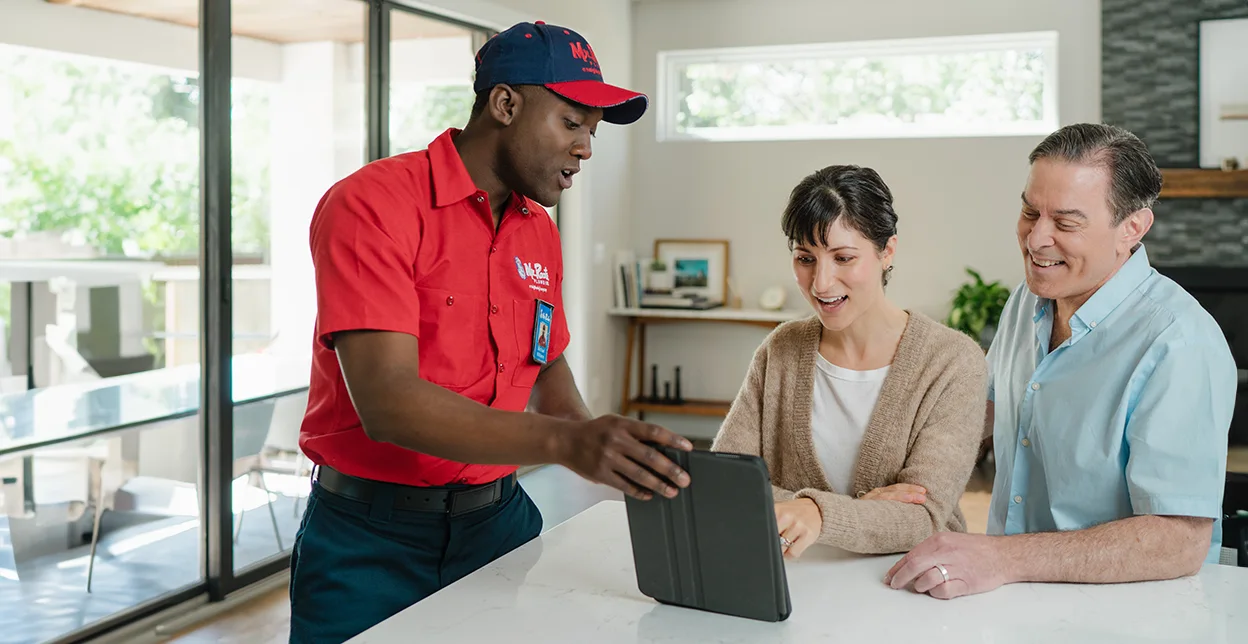
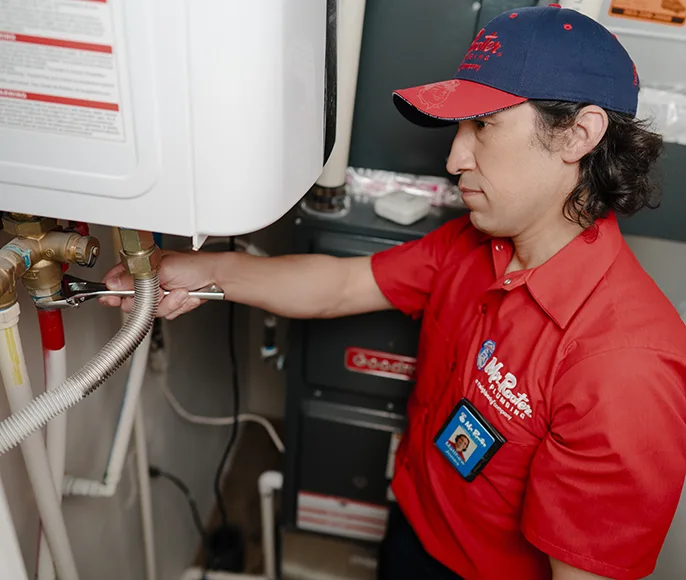
A tankless water heater in St. Clair isn't the right fit for every house. We'd rather tell you that at the kitchen table than after the install.
It makes the most sense when you're tired of running out of hot water, when the old tank is near the end of its life anyway, or when you want the basement or utility closet space back. The savings are real but depend on how you use water. The Department of Energy estimates tankless heaters run 24% to 34% more efficiently than tank models in homes using 41 gallons of hot water a day or less. For heavy users, closer to 86 gallons a day, the gain drops to 8% to 14%, because a tank in a busy house doesn't sit idle much.
Fuel matters too. Natural gas and propane units deliver higher flow rates than electric ones, which is why we usually steer larger households toward gas. Many homes outside town limits in Sullivan, Villa Ridge, and rural Franklin County already run on propane, and propane tankless units work well there. Electric models make sense in smaller homes or as point-of-use heaters for a far bathroom.
The trade-offs are just as real. The upfront cost is higher than a standard tank. Hard water means annual descaling or a softener. And hot water won't reach the faucet any faster unless you add a recirculation setup. We'll walk through it all and give you a flat-rate price for both a tank and a tankless option so you can compare them side by side.