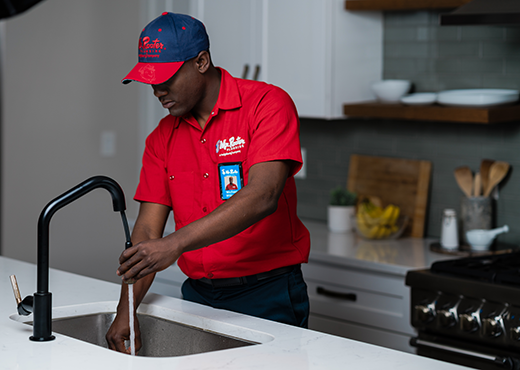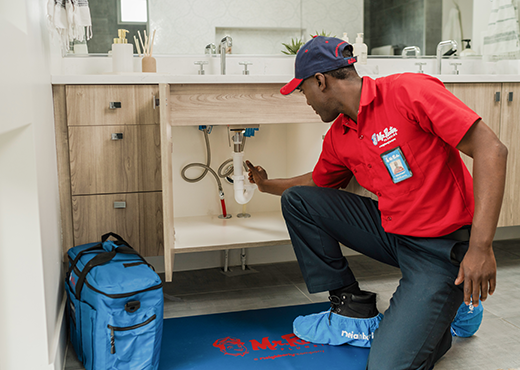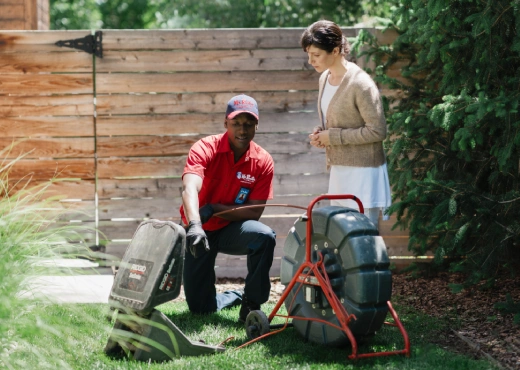

At Mr. Rooter®, we’re here to deal with any sump pump issue in your business, and offer a variety of services, including commercial flood prevention and commercial drainage pump repair. We can install new systems, replace old ones that no longer serve your needs, and repair existing units.
We won’t recommend any unnecessary repairs or services—if you’re happy with your current unit and we can fix it, that’s what we’ll do. If not, and you want something that better suits your business, we can discuss a replacement and help you choose the right unit.
We’re also available for emergency sump pump repair—whatever the day or time, we’re on call, and can rapidly dispatch a team to deal with your sump pump emergency.
When You Should Consider Replacing Your Sump Pump
If your sump pump is over 7 years old and you’re constantly scheduling commercial sump pump maintenance and repair, it could be time for a change. You can patch that unit and keep it running. You may even get a few more years out of it, but how much will you lose on repairs in that time, and how much disruption will it cause?
It’s probably not worth it, and even if you get lucky, it could malfunction completely at any moment.
You should also consider a replacement if your current system can’t keep up with your business needs or if it’s constantly developing problems, such as making loud noises, frequently cycling, or showing clear signs of rust.
What Types of Commercial Sump Pumps Can I Install?
A commercial sump pump is a heavy-duty system that keeps your lower levels from flooding. You need a system that’s capable of handling your environment, one that’s suited to the size of your property, and if you’re not sure which option is best, our technicians can guide you through the pros and cons of each option, including:
- Submersible Drainage Pumps: Sealed units that sit in a pit and are effective in areas with high-volume groundwater. They tend to be quieter than other types of commercial sump pumps.
- Grinder Pumps: Aim to prevent clogs by chopping up solids and other debris before expelling them.
- Shaft-Driven Sump Pumps: Place a motor high above the sump pit, offering greater longevity and performance compared to submerged systems.
- Twin Sump Pump Systems: Dual pumps that share the load, with one handling the normal flow and the other triggering during higher water loads.
- Backup Systems: These systems kick in if the power fails or the primary unit stalls.