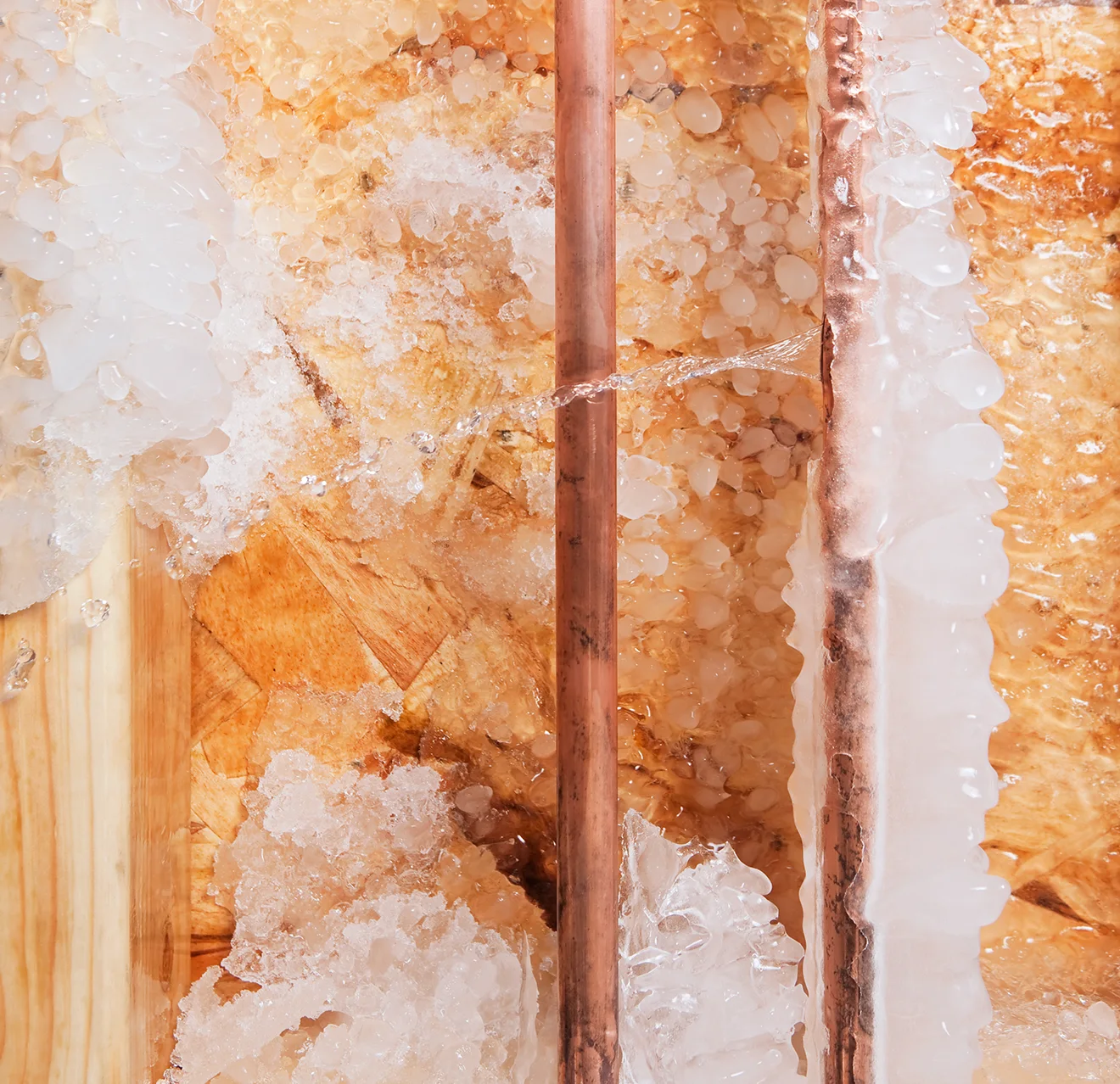
Alongside all the holidays and festive activities winter brings, the threat of frozen pipes increases as temperatures drop. Frozen water pipes in Springfield are more than an inconvenience — just one burst pipe can easily cause thousands of dollars in water damage and restoration costs! When ice forms in your pipes, it expands and pushes against the interior of the pipe, creating cracks and weak points for water to burst from when the pipe thaws.
If it’s too late to prevent frozen pipes, don’t hesitate to call the licensed plumbers at Aire Serv of Springfield. We stock our service vehicles with the tools and parts we need to provide the effective frozen pipe repair Springfield homes can trust. We’ll often instruct you to turn off your water supply to the frozen pipe before we arrive to minimize damage, so be sure you know where your water shut-off valves are located.
Signs Your Pipes Are Frozen
Springfield frozen pipes are no joke, and it’s time to call our emergency plumbers when you experience any of the following symptoms:
- Little to no running water
- Gurgling sounds
- Extremely cold water
- Bulges or cracks
- Frost or condensation on pipes
- Water spots on ceilings or walls
There’s no time to waste if you suspect a frozen pipe — once the water thaws, major leaks and burst pipes aren’t far behind. Contact our team online or by phone for the rapid, reliable frozen pipe repair Springfield-area homeowners count on to mitigate potential water damage and restore your plumbing.
What to Do If Your Pipes Are Frozen
With winter temperatures that regularly fall below freezing, frozen water pipes in Springfield and the surrounding area are a constant threat, and it’s important to know what to do if it happens to your plumbing. The first and most important step is to contact our expert plumbers for an emergency visit so we can assess the extent of the damage and repair the pipe if necessary. Until we arrive, take the following actions:
- Cut the water to the frozen pipe and open all connected faucets to reduce the pressure inside the pipe.
- Turn your home’s heater up a few degrees.
- If you can access the frozen pipe, carefully use a hair dryer, heat lamp, or similar heat source to begin thawing. Do not attempt to use open flames or position an electric heater below the frozen pipe.
- If a leak starts to form during your thawing attempts, use buckets or bowls to keep the water from causing damage
- Leave the rest to us!