The pipe is only part of what a traditional sewer replacement costs. Open-cut work means an excavator across the property, spoil stacked somewhere, and reinstatement afterwards. In Sunnyvale that frequently means a concrete driveway, an established lawn, or planting that took fifteen years to get right. Putting the ground back is often a bigger line on the invoice than the pipe itself, and it's the part homeowners underestimate.
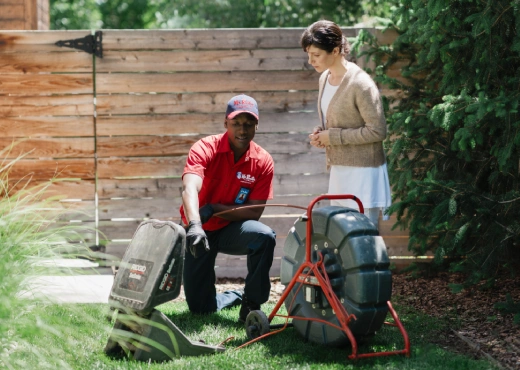
Trenchless changes the shape of the job. Access comes through existing cleanouts or one or two compact pits, the run between them stays undisturbed, and the surface above it never comes up. That usually turns a multi-day job with a week of making good into something finished in a day, with a property you can still use while it happens.
A job in the East Murphy neighborhood, near San Miguel school, is a fair example of how that decision gets made. The line had extensive root intrusion, so rebuilding it through the front yard was the sensible call rather than opening the ground the length of the run. We arranged the permit and the city inspection, replaced the line, and installed both a two-way cleanout and a city cleanout while the work was open. Everything passed inspection.
There's a second reason it matters here. The U.S. EPA estimates at least 23,000 to 75,000 sanitary sewer overflows happen each year in the United States, and a failing private lateral is one of the ways a household ends up contributing to that. Repairing a line properly rather than clearing it repeatedly takes your property out of that category.
None of this makes trenchless automatically cheaper. On a short run with easy access it sometimes isn't. What it reliably does is remove the reinstatement cost and the disruption, and on a property where the sewer runs under something you care about, that's usually the deciding factor. If a blockage is what brought you here rather than a known pipe failure, HydroScrub® jetting or a straightforward sewer line repair may be all you need.