Living in Austin is more than dealing with hot summers and live music. You get limestone aquifers, expansive clay soil, and water picks up calcium and magnesium as it filters through underground rock formations, creating specific plumbing challenges you won't find everywhere.
Our team of licensed plumbers serves Austin homes every day. We live and work here too. We've seen how local conditions affect plumbing systems across Cedar Park, Georgetown, Lakeway, Round Rock, West Lake Hills, Pflugerville, and throughout the metro area. We know what to look for, how to diagnose problems, and how to recommend solutions for your home and your budget. When you call Mr. Rooter Plumbing of Austin for service, you're working with professionals who understand your plumbing the way a neighbor would.
Get Comprehensive Plumbing Services from Austin's Trusted Team
Here's how we help Austin homeowners protect their homes and keep their plumbing running smoothly:
- Water heater installation and repair: Austin's hard water accelerates sediment buildup in tank water heaters. We flush tanks to remove buildup, replace burned-out heating elements due to overuse, and install new systems, including energy-efficient tankless models, providing hot water on demand. During a flush, we check the anode rod, test the pressure relief valve, and inspect connections for early signs of leaks. If your water heater is more than 10 years old and showing signs of strain, we walk you through replacement options that match your household's hot water needs and your budget. Whether it's flushing to eliminate tank buildup or resolving an error code during a tankless water heater service, we have you covered.
- Water filtration and softener systems: If you're tired of mineral spots on dishes and fixtures or you want to extend the life of your water heater and appliances, a filtration or softener system removes the calcium and magnesium before they enter your plumbing. We help you choose the right system based on your water usage, install it at the main supply line, and show you how to maintain it so it keeps working efficiently for years.
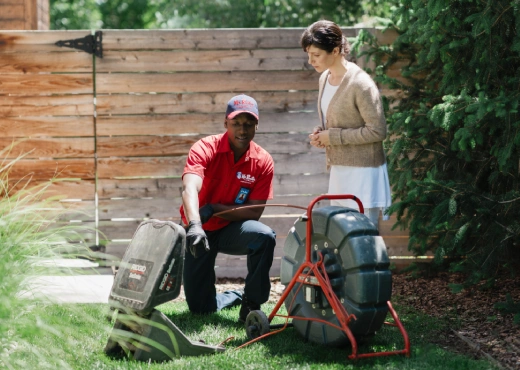
- Drain cleaning services: Slow drains turn into full blockages fast. The location of the clog tells us a lot about what caused it. If your kitchen sink drains slowly but the bathroom is fine, we're usually looking at grease or food debris in the branch line. If multiple fixtures back up at once, the blockage is likely in the main drain or sewer line. We start with a camera inspection so you see what we're dealing with. Is it a grease clog we clear with our HydroScrub jetting system? Soap and hair buildup we cable out? Tree roots have cracked the pipe and need a different approach? In older Austin homes with cast iron drains, we also check for corrosion and scale buildup on the pipe walls. The rough interior surface catches debris and makes clogs more frequent over time.
- Clogged drain repair: When a clog won't clear or keeps coming back, there's usually a deeper issue. We use video camera inspections to see what's happening inside your pipes, then recommend the right repair to solve the problem for good. Sometimes the issue is a bellied section of pipe where debris collects, or a crack letting roots grow into the line. Once we know what we're dealing with, we recommend cable cleaning, hydro jetting, spot repair, or replacement, depending on the pipe's condition.
- Sewer system backups: A sewage backup is more than an inconvenience. It's a health hazard. We respond fast to clear the line, identify the cause (whether it's roots, a bellied pipe, grease blockage, or a city main issue), and restore safe drainage to your home. Austin Water notes that grease blockages, damaged pipes, tree roots, and groundwater infiltration are among the top causes of sewer overflows. We see these issues daily in service calls across the metro area.
- Trenchless sewer line replacement and repair: Austin's clay soil and mature trees damage underground sewer lines over time. Trenchless technology lets us repair or replace your sewer line without tearing up your yard, driveway, or landscaping. We either pull a new pipe through the old one (pipe bursting) or install a liner inside the existing pipe (cured-in-place pipe). You save time, money, and the mess of traditional excavation.
- Drain repair: Cracked, corroded, or misaligned drain lines cause recurring clogs and slow drainage. We assess the damage through camera inspections, identify the affected section, and recommend the most cost-effective repair to restore proper flow.
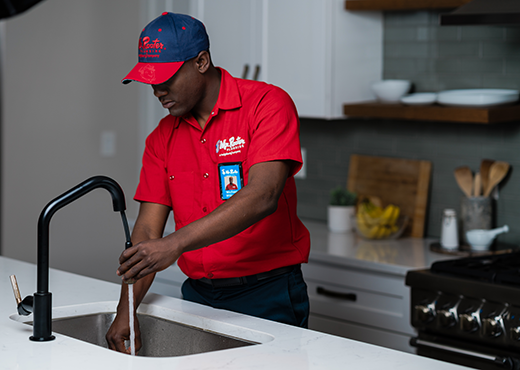
- Faucet installation and repair: A slow drip wastes 20 gallons per day, according to Austin Water. Outdated fixtures make your kitchen or bathroom feel tired. We repair leaks, replace worn cartridges and O-rings, and install new faucets that match your style and improve water efficiency.
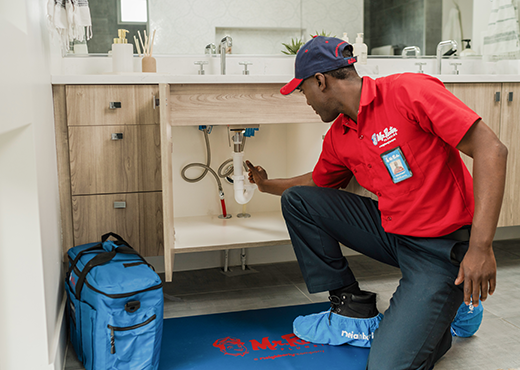
- Sink installation and repair: From undermount kitchen sinks to pedestal bathroom sinks, we handle installations, repairs, and upgrades. If your sink drains slowly or leaks underneath, we diagnose the issue (often a worn tailpiece gasket, loose P-trap, or clogged pop-up assembly) and get it working right.
- 24/7 emergency plumbing services: Plumbing emergencies don't wait for business hours. When you call, you reach a live person, not an answering machine. Our team is ready to respond day or night.
Contact us now to schedule service with plumbers who treat your home with respect and get the job done right the first time.
Common Plumbing Problems We See in Austin Homes Every Day
- Sediment buildup in water heaters, especially in older tank models: Austin's moderately hard water means tank water heaters accumulate calcium carbonate sediment faster than they would in soft-water areas. Over time, this layer gets thicker and acts as a barrier between the heating element and the water. Efficiency drops. Energy costs climb. When we drain a 10-year-old tank water heater in Austin, we typically see 2 to 4 inches of white calcium carbonate sediment at the bottom. In soft-water cities, you see a thin layer of rust. Here, you get mineral rock. If you hear popping or rumbling sounds from your water heater, you're often hearing water trapped under the sediment layer boiling and breaking through. We recommend annual flushing for tank units. Many homeowners switch to tankless systems to avoid the maintenance cycle entirely.
- Slab leaks in homes: Many Austin-area homes built in the 1970s through the 1990s have slab foundations with copper supply lines running beneath the concrete. Over time, shifts in clay soil, corrosion from mineralized water, or simple wear cause pinhole leaks in those buried lines. The first signs are often a warm spot on the floor, a spike in your water bill with no obvious cause, or the sound of running water when everything is turned off. We use electronic leak detection equipment and thermal imaging to locate the leak without breaking up more concrete than necessary, then decide whether to repair the line in place or reroute it through the attic to avoid future slab breaks.
- Root intrusion in older sewer laterals: Mature oak, pecan, and elm trees are part of what makes older Austin neighborhoods beautiful, but their roots can cause some serious issues. Their root systems seek out moisture and infiltrate clay or cast-iron sewer lines through joints and cracks. If you have large trees near your sewer line and you're seeing recurring slow drains, gurgling sounds, or backups, a camera inspection usually reveals hair-thin roots working their way into the sewer line and catching toilet paper and debris. In advanced cases, the roots form a dense mat that completely blocks the line. We clear the roots with cutting tools or hydrojetting, then assess whether the pipe itself needs repair or replacement to prevent the roots from returning.
- Outdoor faucet and irrigation line damage after freezes: Even though hard freezes are rare in Austin, they do happen. Outdoor plumbing is especially vulnerable. We see burst hose bibs, cracked backflow preventers, and split irrigation lines after cold snaps like the one in February 2021, especially when homeowners don't winterize before a freeze warning. Water left standing in an outdoor faucet or irrigation line expands when it freezes. Pressure cracks fittings, valves, and pipes. After a freeze event, we get dozens of calls from homeowners who turn on an outdoor spigot in the spring and find water spraying from a crack.
- Corroded galvanized supply pipes: Many older Austin homes still have original galvanized steel supply pipes. Over time, rust and mineral scale narrow the pipe's interior diameter, causing water pressure to drop throughout the house. Water may also be discolored when you first turn on a faucet or have a metallic taste. Eventually, the corrosion eats through the pipe wall, causing leaks. If your home was built before 1980 and you're experiencing low pressure, rusty water, or pinhole leaks, a whole-house repipe with modern PEX or copper is usually the long-term solution.
Protecting Your Austin Home's Plumbing Year-Round
- Spring (March through May): This is when we see irrigation startup issues. Backflow preventers cracked during winter freezes. Sprinkler lines split when ice expanded inside them. Leaks going unnoticed during the dormant season all show up when systems get turned on for the first time. It's also a smart time to flush your water heater before summer demand kicks in. Sediment building up over the winter reduces efficiency when you need hot water most.
- Summer (June through August): Peak water usage stresses older pipes and fixtures. We see more slab leaks, toilet flapper failures, and pressure issues during this period. Higher demand and hotter temperatures put extra strain on components already wearing out. If you've been ignoring a slow drip or a running toilet, summer heat and increased water use turn it into a bigger problem. This is also when Austin Water typically enforces irrigation restrictions. Make sure your system isn't leaking or watering outside your assigned days.
- Fall (September through November): This is your maintenance window. Schedule drain cleaning before holiday guests arrive, check your water heater for signs of leaks or corrosion, and test your main shutoff valve so you're ready if winter brings a freeze. If you have an irrigation system, this is the time to winterize it by draining lines and insulating backflow preventers. A little preventive work in the fall saves you from emergency calls in December and January.
- Winter (December through February): Even mild Austin winters bring occasional hard freezes. Outdoor faucets, exposed pipes in attics or garages, and irrigation backflow preventers are the most common failures we respond to after a cold snap. If a freeze warning is issued, take it seriously. Insulate outdoor faucets, disconnect hoses, open cabinet doors under sinks on exterior walls to allow warm air to circulate, and know where your main shutoff is in case a pipe bursts.
Plumbing Permits and Inspections in Austin
Most plumbing repairs don't require a permit. Water heater replacements, sewer line work, gas line installations, and repiping projects usually do. We handle permit applications and coordinate inspections with the City of Austin so you don't have to navigate the process yourself. Austin's plumbing code is based on the International Plumbing Code with local amendments. Inspectors pay close attention to backflow prevention, proper venting, and earthquake strapping for water heaters. If you're buying or selling a home in Austin, the buyer's inspector might flag older galvanized pipes, missing expansion tanks, or non-compliant water heater installations. We address all of these before closing to keep the transaction on track.
No matter what your plumbing needs are, we're here to help. Contact us today to schedule service or request an estimate. We serve Austin and surrounding areas, including Cedar Park, Georgetown, Lakeway, Round Rock, and West Lake Hills.
When to Call Austin 3-1-1 vs. When to Call a Plumber
If you are dealing with a non-emergency utility concern like water taste or odor issues, sewer odors, or a manhole concern, Austin Water directs residents to use Austin 3-1-1. Those requests are typically investigated in 1 to 3 business days. If you see an active water leak that is not already on the City's Leak Response Map, call Austin Water Dispatch at 512-972-1000, available 24/7. If the problem is inside your home or on your side of the meter, you will usually want a licensed plumber. Austin Water states property owners are responsible for service lines past the meter and internal plumbing. If you are not sure which it is, we help you sort it out and point you to the right next step.