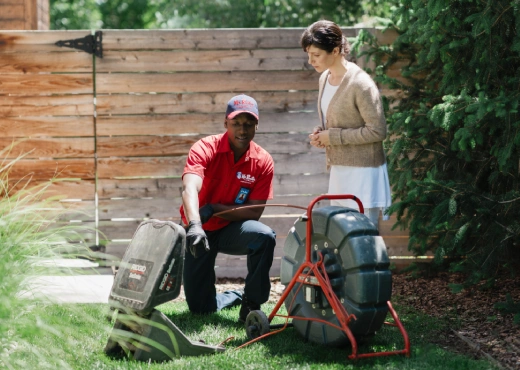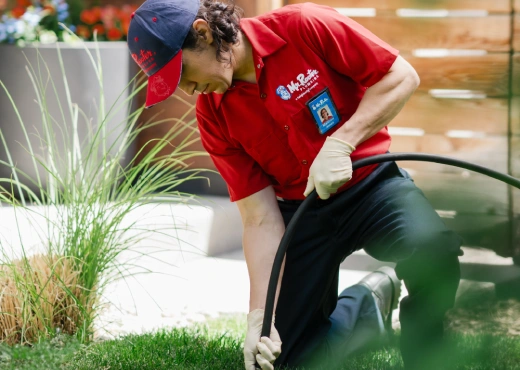
Two main methods handle the majority of trenchless sewer work: pipe lining and pipe bursting. Each one fits different damage scenarios, and our Richmond plumbers assess your line with a camera inspection before recommending which approach makes sense.
Pipe lining, or cured-in-place pipe (CIPP) lining, works best when the existing pipe is structurally intact enough to serve as a mold. We saturate a flexible liner with epoxy resin, insert it into the damaged pipe, and inflate it against the interior walls. Once the resin cures, typically within a few hours, it becomes a rigid new pipe inside the old one. This method handles cracked pipes, root intrusion, minor corrosion, and joints that have shifted with the soil. Richmond's freeze-thaw cycles every winter are hard on underground pipe joints, and CIPP is one of the most effective ways to seal those without any digging.
Pipe bursting works when the pipe is too far gone to line. We pull a cone-shaped bursting head through the old pipe, fracturing it outward while simultaneously pulling in a new HDPE pipe behind it. The old pipe material gets pushed into the surrounding soil, and the new pipe takes its place. This method restores full pipe diameter and handles complete structural failures, severely collapsed sections, and pipes that have shifted badly out of alignment.
Both approaches work on clay, cast iron, PVC, and Orangeburg pipe, which was a common material used in Kentucky homes built before the 1970s. Our plumbers run a camera down the line first so there are no guesses about pipe condition or which method to apply.