Older homes near downtown Richmond and around the Eastern Kentucky University campus often rely on cast iron drain stacks and clay sewer laterals. Cast iron corrodes and scales internally until pipe walls wear thin. Clay pipe lasts decades, but section joints fail. Madison County’s clay soil swells when wet and shrinks during dry summers, while freeze-thaw cycles drive further ground shifting. Joints pull apart. Tree roots infiltrate those gaps within a single season.
Watch for these signs of a failing drain line:
- Slow drains in more than one fixture at the same time
- Gurgling from the tub when the washer drains
- Sewage odor near a basement floor drain
- A soggy strip of lawn over the sewer line, even in dry weather
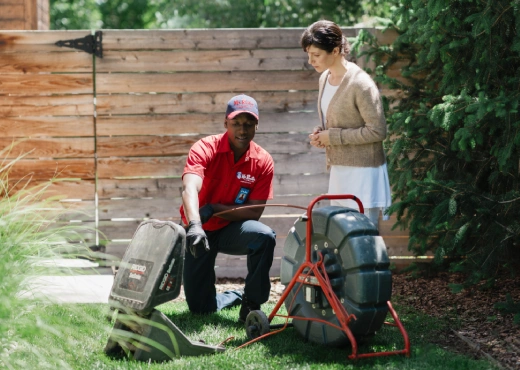
Most broken drains fall into three repair paths. A single bad section gets dug out and replaced. Cracked pipe with good overall shape is often a candidate for pipe lining, which cures a new epoxy wall inside the old one. Lines with widespread joint failure or a collapse need full sewer line repair and replacement, and trenchless sewer line repair keeps your driveway and landscaping intact when the pipe allows it.