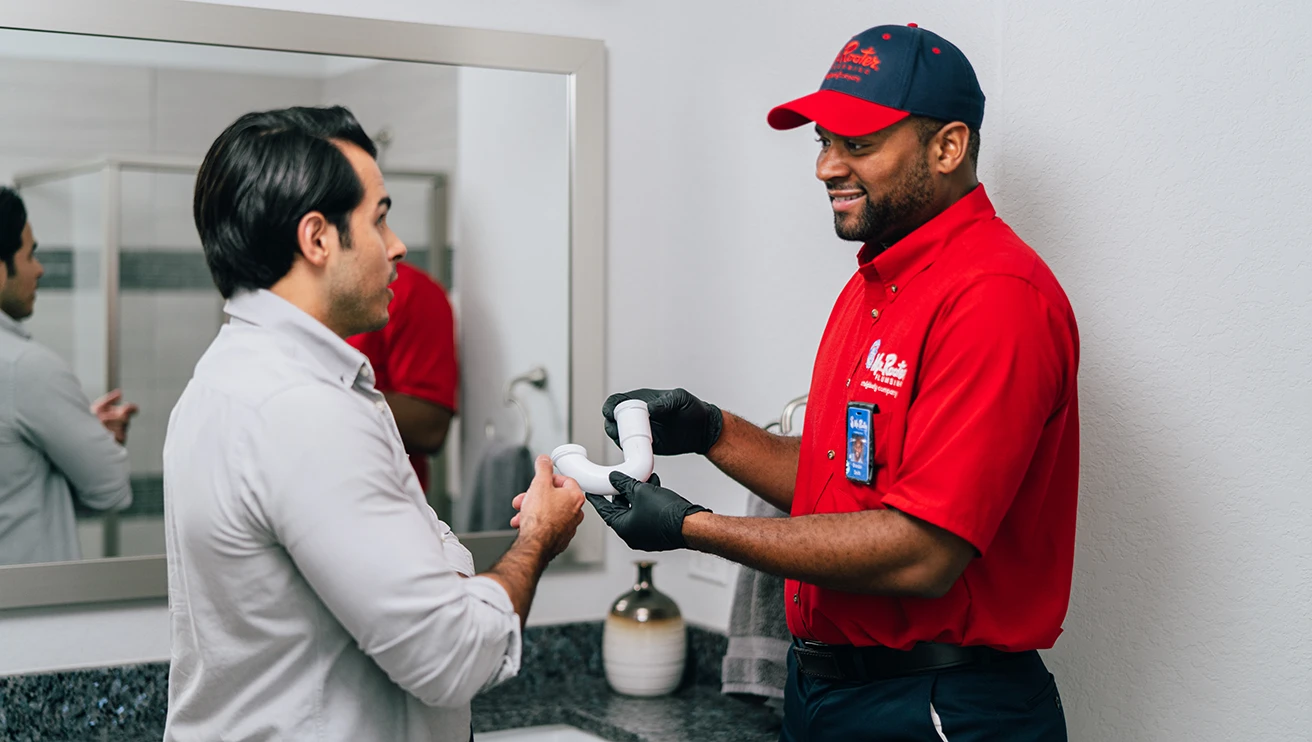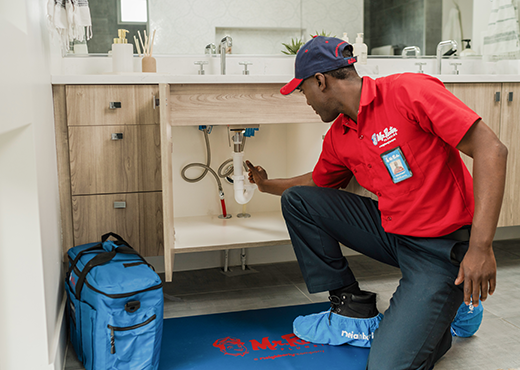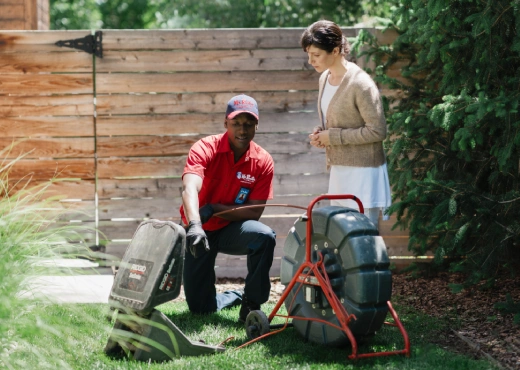
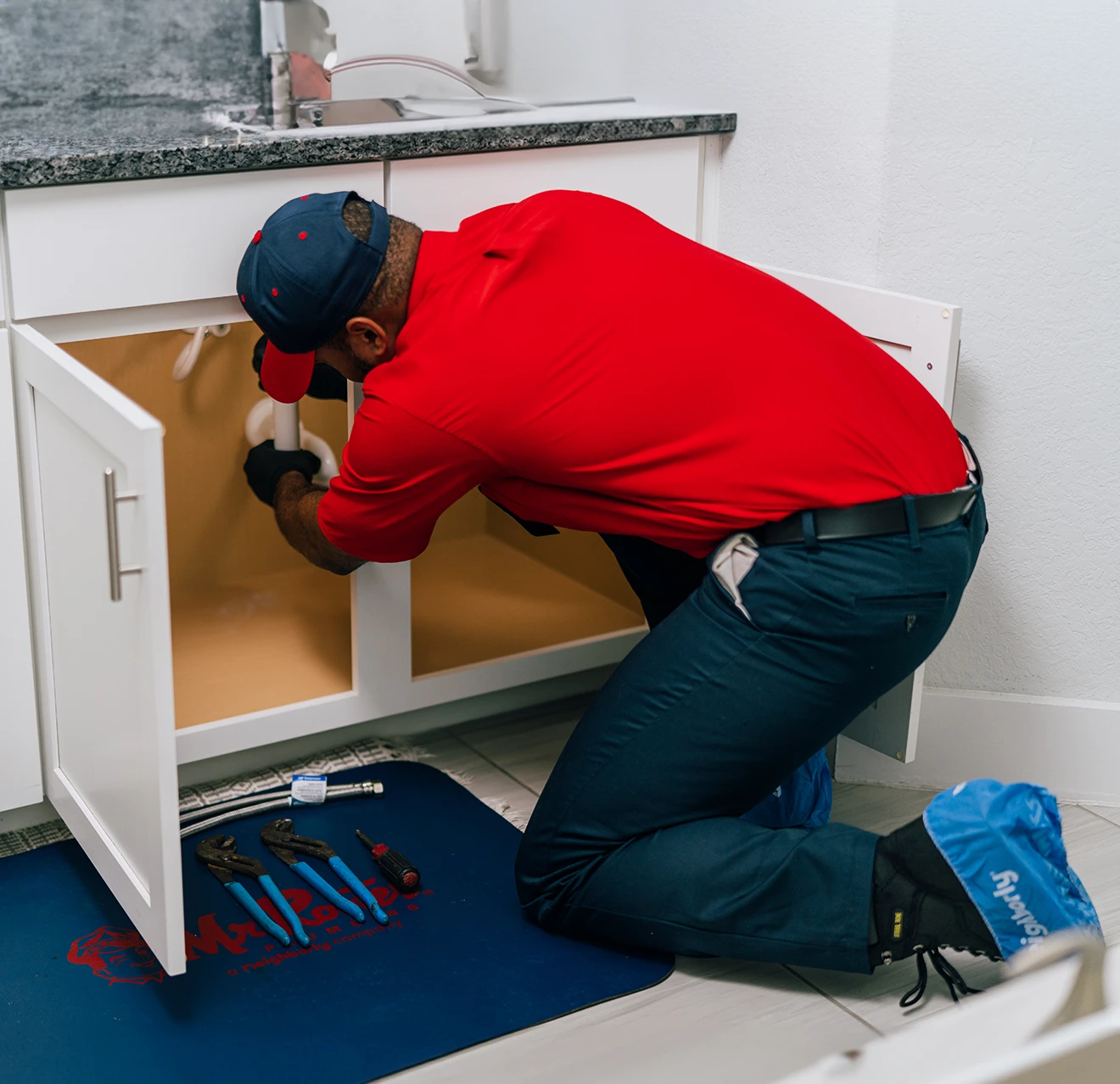
Once we know what we're dealing with, we match the repair method to the problem. A localized crack or root intrusion in an otherwise sound line often qualifies for spot repair, in which we excavate only the damaged section and replace it with Schedule 40 PVC or cast iron, depending on what's already in the line. That's a cleaner outcome than pulling the entire lateral when only one segment has failed.
Drain replacement becomes the right answer when a pipe has failed across multiple sections, when a clay lateral shows widespread joint separation, or when a line has been repaired more than once and keeps backing up. Repeating the same spot repair on a deteriorating line is like patching the same tire six times. At some point, the line has to come out.
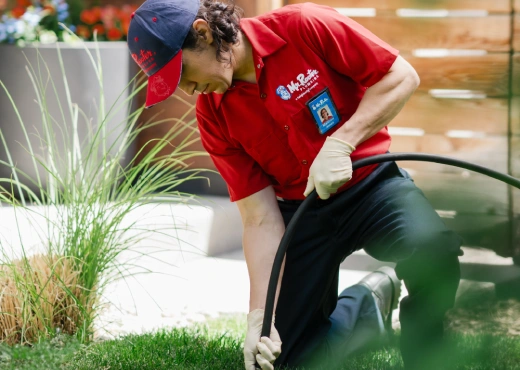
For drain lines that have built up heavily from the inside but still have structural integrity, we use HydroScrub® jetting to scour the pipe walls clean. Our patented HydroScrub® Jetting system pushes a high-pressure water stream through lines ranging from 1.25 to 36 inches, cutting through grease, mineral scale, and biofilm that a standard drain snake won't reach. It's especially effective on kitchen drains with years of grease accumulation and on commercial drain lines that handle high daily volumes. Where snaking punches a hole through a clog, HydroScrub® clears the full pipe wall.
Clogged drains that slow down again within weeks of being cleared often indicate a deeper structural problem. If your drains keep backing up, the issue usually isn't just buildup. It's a partial collapse, an active root system in the lateral, or a sag in the line where water pools and debris accumulates. A camera inspection shows exactly which one.