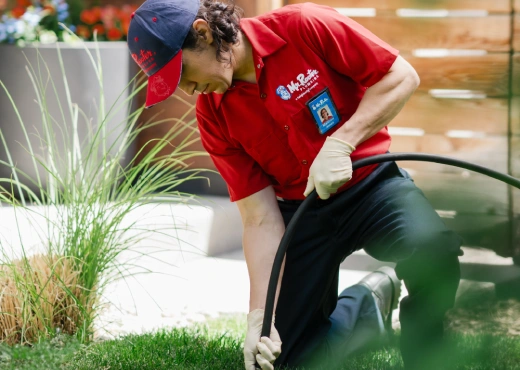
As a reliable, accurate, and experienced team supporting the Minneapolis community for over three decades, there’s no guesswork or surprises. This is a testament to the successful process we follow that helps create a stress-free experience for you.
You can always expect:
- Your Call Is Answered by A Real Person: Available 24/7, our team gets your information, explains the scheduling options, and strives to get a tech out the same day.
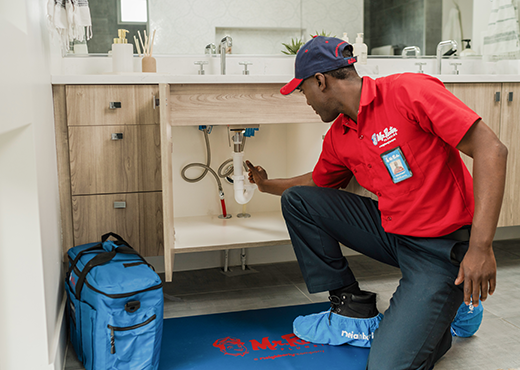
- Your Technician to Arrive On Time: You’ll get a heads-up when they’re on the way. They introduce themselves, put on shoe covers, and protect your floors before touching anything.
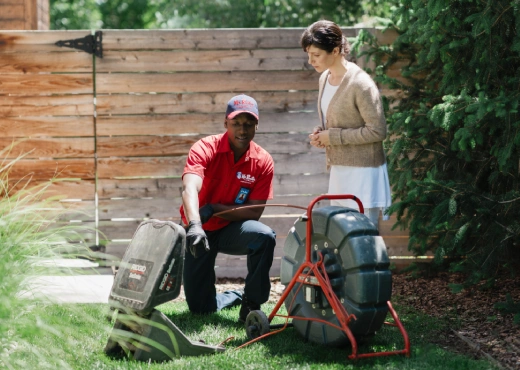
- A Thorough Inspection of the Outdoor Faucet and Pipes: This includes checking whether your current spigot is frost-free, looking for signs of freeze damage inside the wall, and evaluating the valve type.
- Financial Options and Upfront Pricing: Rebuild the existing faucet, upgrade to a frost-free hose bib with a ball valve, or repair a burst pipe. You’ll know what each costs before work starts.
- The Work to Be Done Right: Most hose bib repairs and replacements are completed in a single visit from a fully stocked truck. No second trip or no waiting on parts.
- A Review of the Finished Work and Maintenance Tips: We’ll offer upkeep advice like when to disconnect your hose before the first freeze, how to operate the new shutoff, and what to watch for going forward.
Ready to upgrade or schedule a repair? Reach out today to schedule an outdoor spigot replacement in Minneapolis.
Why You Should Upgrade to a Ball-Valve Frost-Free Spigot
Most older Minneapolis homes have gate-valve spigots that are harder to operate and more prone to leaking over time.
A ball-valve frost-free spigot is significantly easier to use, creates a tighter seal, and eliminates the risk of a frozen pipe inside your wall every winter. It’s a straightforward replacement (supported by our highly rated technicians) with a long-term payoff.
Outdoor Faucet Repair and Replacement: What Minneapolis Homeowners Need to Know
When to Repair or Replace Your Outdoor Faucet
The best time to deal with an outdoor spigot issue is before the next freeze, not during it.
Here’s when to call:
- Spring (April–May): Turn the hose bib on for the first time and hear a drip, notice low pressure, or spot water pooling inside near the exterior wall. These are signs that the faucet or the pipe behind it may have frozen and cracked over winter.
- Summer: A hose bib that won’t shut off fully, leaks from the handle, or has visible rust and corrosion is a candidate for a rebuild kit or full replacement before fall arrives.
- Fall (September–October): This is the ideal time to upgrade an old T-handle or gate-valve spigot to a frost-free model before the first hard freeze locks in your risk of a burst pipe.
- Anytime: If you see water staining on your interior walls near the faucet, feel moisture in your basement or crawl space after using the outdoor tap, or notice unexplained increases in your water bill.
7 Signs Your Outdoor Faucet or Spigot Needs Attention and How We Address Them
Don’t ignore these warning signals. A minor leak now can become a flooded basement in spring.
You should look out for:
- Dripping from the spout when the faucet is fully closed. A worn washer or packing nut can be repaired by our plumbers using a rebuild kit.
- Leaking from around the handle usually means the packing nut may need tightening or the stem packing replaced.
- Water comes out slowly or not at all. Our pros will complete an inspection to uncover a possible frozen section, debris in the line, or a failed vacuum breaker.
- Visible rust, corrosion, or cracks on the body can point to structural damage that typically means professional replacement over repair.
- The handle is stiff, or it’s hard to turn in older gate-valve spigots that corrode and seize. A professional ball-valve replacement is far easier to operate.
- You hear water running inside your wall after turning the faucet on. Our plumbers can address this serious sign that the pipe behind the bib may have split.
- Your outdoor faucet doesn’t have a frost-free stem. If you can see the shutoff happens right at the wall, you have an older style that’s at high risk every winter and should be inspected by our team.
Noticing any of these? Request a free estimate and schedule outdoor faucet repair or replacement in the Twin Cities before it becomes a bigger problem.
How Freeze-Thaw Cycles Damage Outdoor Faucets in the Twin Cities Area
Minnesota’s winters are hard on exterior plumbing, and the damage isn’t always obvious right away. When temperatures drop below freezing, any water sitting in the exposed section of a traditional faucet can freeze and expand, cracking the copper pipe hidden inside your wall.
The ice acts as a plug through winter, so you won’t see the leak until spring when you turn the water back on, and it pours straight into your basement or crawl space. That’s the “spring surprise” no homeowner wants.
Frost-free hose bibs solve this by positioning the shutoff valve 12 to 14 inches inside your home’s heated envelope. When you turn it off, water drains out of the entire stem, leaving nothing in the cold zone to freeze.
If your home still has an older T-handle or gate-valve spigot, upgrading to a frost-free model is one of the most cost-effective things you can do before fall.
Fall Winterization: How to Get Ahead of Frozen Pipes
Don’t wait for the first hard freeze to think about your outdoor faucets.
Here’s how to protect them every fall:
- Disconnect garden hoses before the first freeze. A hose left attached traps water in the bib and defeats the drain function of even a frost-free faucet, leading to freeze damage.
- Shut off the interior valve, usually in the basement near the exterior wall, and open the outdoor faucet to let it drain completely. This is the standard winterization process for traditional spigots.
- Let the bib drain automatically once you remove the hose and turn it off.
- Inspect the faucet body in fall for cracks, corrosion, or stiffness; replacing a worn spigot in October is much easier than dealing with a burst pipe in February.
- Consider a cover or insulated faucet cap as an extra layer of protection for older spigots that aren’t yet frost-free.
- Call a licensed plumber if you’re unsure whether your current outdoor faucets are frost-free or if you want a pre-winter inspection.
Our hose bib replacement professionals in Minneapolis can assess your exterior plumbing and recommend upgrades before cold weather hits.