If you notice any of these warning signs of problems with your home’s sewer line, call us. These signs indicate that you likely need sewer line repair or replacement:
- Dirty, smelly water is backing up into your toilets or drains.
- Your water bill suddenly goes up without warning.
- A gurgling noise or other sounds coming from the pipes.
- Your yard or lawn has wet spots, and you don't know why, or you keep finding marshy pools of dirty water in the yard.
- A sewer smell lingers, or your drains smell like rotten food or mildew.
- Pests like rodents and roaches are attracted to your yard or home.
- Your toilet's water level goes up and down, or you have frequently clogged toilets.
- There is mold or mildew growth on the walls or cracks in the foundation.
- Your lawn is suddenly greener than ever, especially near the sewer closeout pipe.
Preventing Residential Sewer Line Problems
You can often prevent plumbing problems and reduce the risk you’ll need sewer line repairs. Our Advantage Plan makes it easier to schedule plumbing maintenance like drain cleaning services, sewer line inspections, and more. By keeping up with sewer line maintenance, you can avoid costly sewer line problems. Use these tips to prevent residential sewer line issues:
- Only flush toilet paper and waste down the toilets.
- Don’t plant trees, bushes, or shrubs near the sewer line.
- Don’t rinse fat, oil, grease, paint, or pieces of food down the drains.
- Schedule regular sewer line inspections and drain cleaning services.
- Fix plumbing problems as soon as you notice them.
Sewer Line Replacement Methods
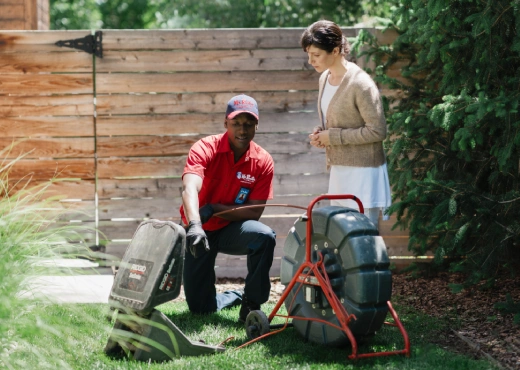
We will only recommend sewer line replacement if sewer line repair isn't possible. This might be because the damage to the sewer line is too extensive to repair, or the sewer lines are too old and will keep needing repair year after year. We make our sewer line replacement methods as easy and fast as possible for the convenience of our customers. We use a trenchless residential sewer line replacement method. We use a small hole at the front and back of the piping to guide the new sewer line into place. Our sewer pipes can last up to 100 years and are resistant to chemicals, tree roots, leaks, and breaks.