Mr. Rooter® Plumbing experts explain how annual maintenance prevents costly repairs and what to include in your annual plumbing maintenance checklist:
|
Your home's plumbing doesn’t get time off. It’s working hard for you every single day, delivering clean water, draining away waste, and keeping your household running smoothly. Giving it just a few minutes of your attention once a year can prevent the kind of surprises that no homeowner wants to deal with.
In this article, our experts cover why annual maintenance matters, how to check the most critical components of your home’s plumbing system, and when to call for professional assistance. Here's your complete guide to annual plumbing system maintenance.
Article contents
- Why Annual Plumbing Maintenance Is Important
- Your Complete Annual Plumbing Maintenance Checklist
- How Often Should You Schedule Professional Plumbing System Maintenance?
- When to Call a Professional Plumber for Plumbing Maintenance
- Annual Home Plumbing Maintenance Checklist FAQs
Why Annual Plumbing Maintenance Is Important
Annual plumbing maintenance helps your system last longer by catching small problems before they become expensive emergencies.
A yearly checkup gives you the chance to spot leaks, slow drains, or early signs of wear before they cost you more in utilities and repairs. Even small issues (like a dripping faucet) add up quickly: According to the U.S. Environmental Protection Agency, household leaks waste nearly 1 trillion gallons of water annually nationwide, and a single dripping faucet can waste more than 3,000 gallons per year!
Regular maintenance also supports your plumbing system's long-term performance. Most importantly, staying proactive gives you peace of mind, knowing your home is protected from preventable and potentially costly surprises.
Most of these plumbing maintenance tips take just a few minutes and require no special expertise.
Your Complete Annual Plumbing Maintenance Checklist
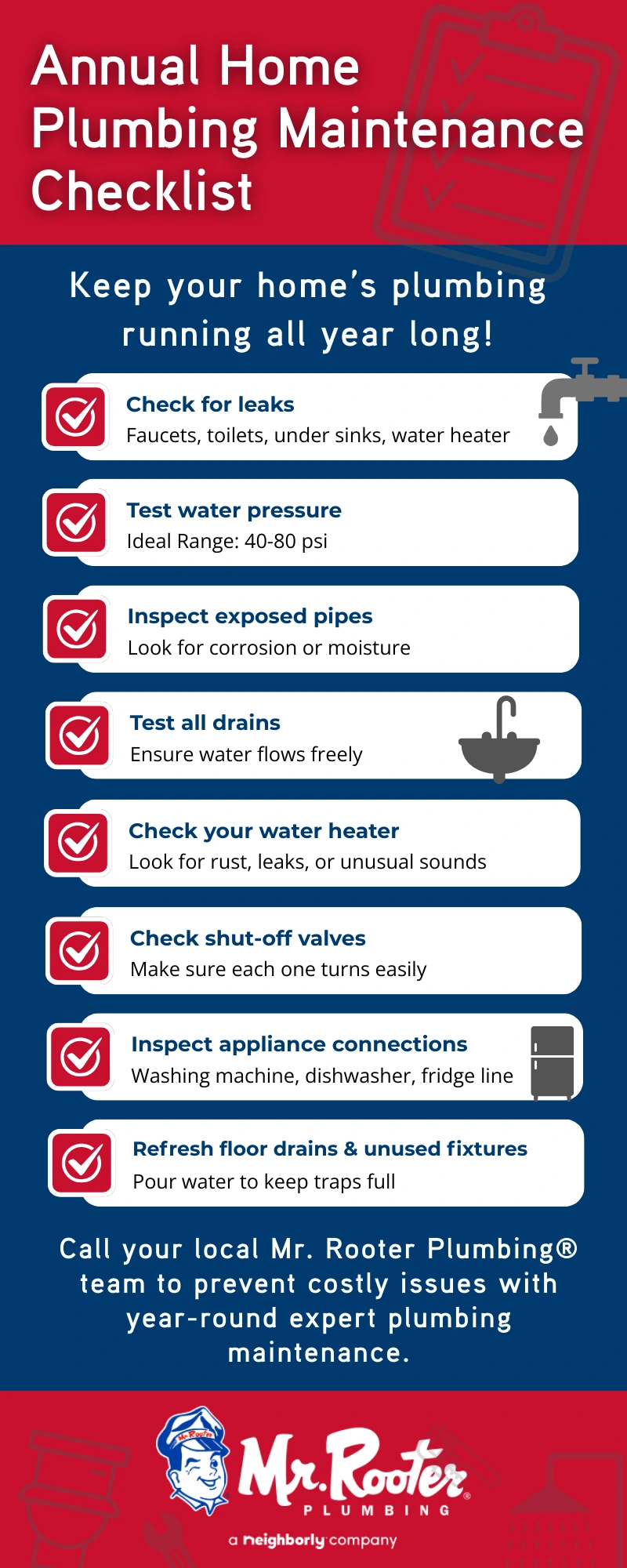
Infographic created with Canva by Samantha Dunoff on 11/23/2025
This simple plumbing maintenance checklist covers the most important tasks homeowners should review once a year.
You don’t need any special tools or technical know-how to spot issues in your home’s plumbing system. This walkthrough will help you ensure everything looks, sounds, and flows the way it should. Each step is essential for staying ahead of issues and keeping your plumbing system reliable year-round.
1. Check for leaks throughout your home
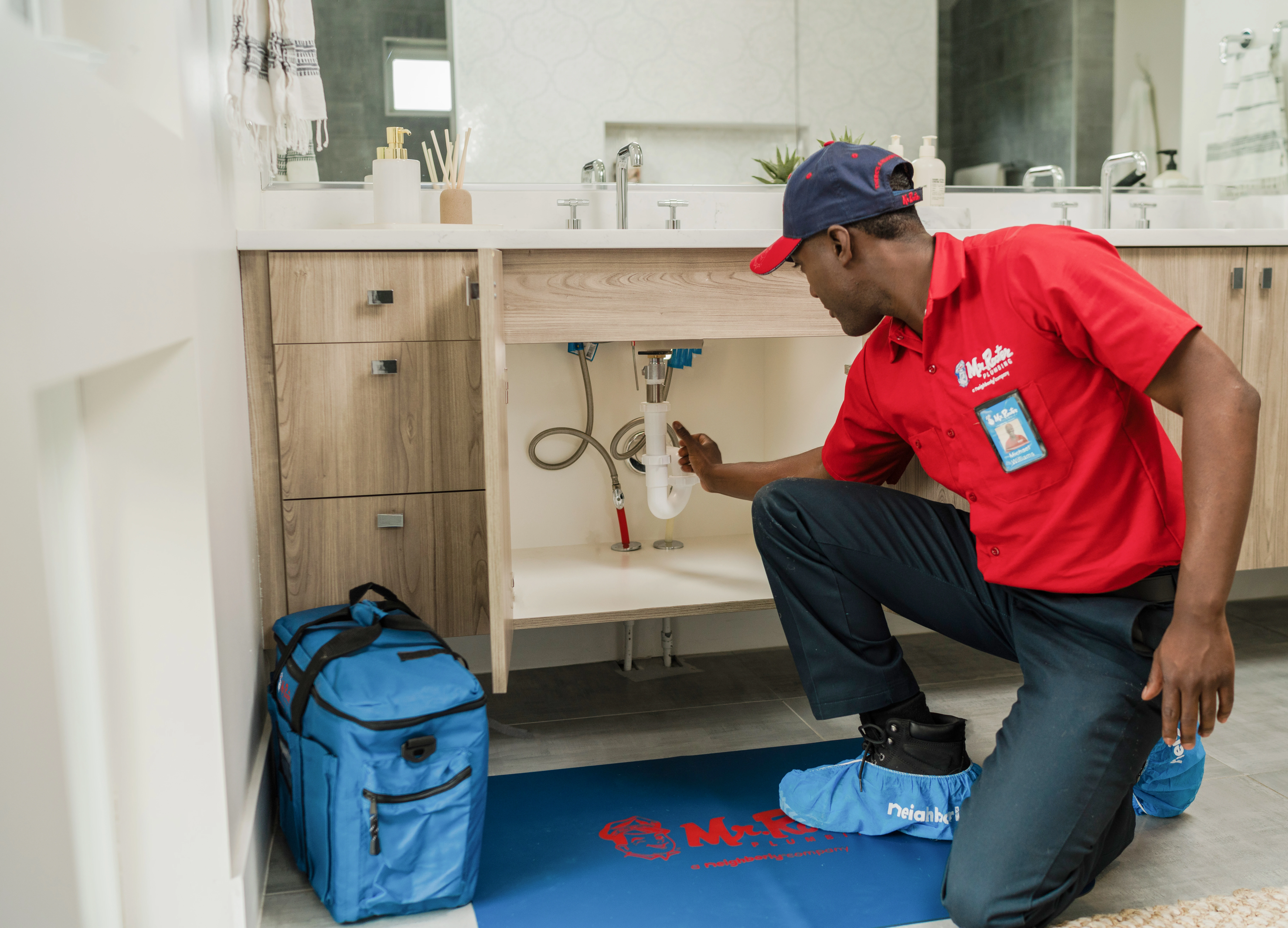
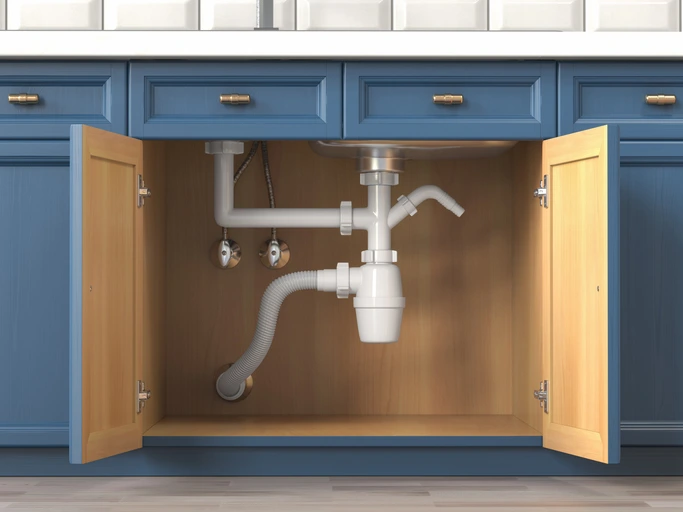
Walk through your home and look for drips around faucets, toilets, under sinks, and near your water heater. Even tiny leaks can lead to warped cabinets, mold growth, or rising water bills. To detect silent toilet leaks, add a few drops of food coloring to the tank—if color appears in the bowl without flushing, you have a leak that needs attention.
2. Test your water pressure
Use an inexpensive pressure gauge (available at any hardware store) on an outdoor spigot to measure your home's water pressure. The ideal range is 40–80 PSI. Low pressure may indicate a hidden leak, while high pressure can stress pipes and cause premature fixture wear. If your reading falls outside the ideal range, a professional can diagnose the cause.
3. Inspect exposed pipes and fixtures
Check pipes in basements, utility rooms, and crawl spaces for rust, discoloration, mineral deposits, or moisture. These signs often indicate a developing problem. Make sure pipes in unheated areas have sufficient insulation to help prevent freezing and condensation issues.
4. Test all drains for proper flow
Run water in every sink, shower, and tub to check the drainage speed. Slow drain flow often signals developing clogs. A baking soda and hot water rinse can help with mild buildup, but recurring slow drains typically require professional drain cleaning services.
5. Check your water heater
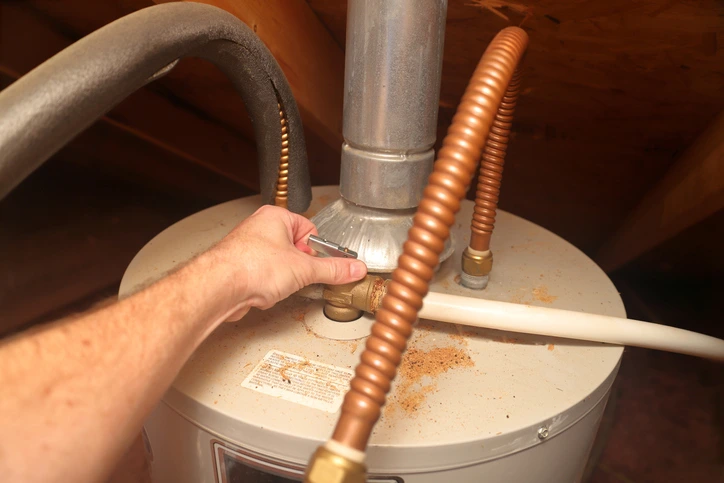
Look for rust, moisture, or unusual sounds around the unit. Test the temperature and pressure relief valve according to the manufacturer's instructions; you should hear water flow when you lift the lever. Flushing a water heater removes sediment buildup, but this process is best left to a trained professional. If your water heater hasn't been serviced recently, schedule professional water heater maintenance.
6. Test shut-off valves
Turn your main water shut-off valve and each fixture's individual valve to confirm they move freely. A stuck valve can turn a small leak into a stressful emergency. Take this opportunity to show household members where the main shut-off is located so everyone knows how to act quickly if needed.
7. Inspect appliance connections
Examine the supply lines for your washing machine, dishwasher, and refrigerator. Washing machine hoses should be replaced every five years, or sooner if you notice bulging, cracking, or dampness on the exterior of the hose. Tighten loose fittings and watch for wet spots that may indicate hidden leaks.
8. Refresh floor drains and unused fixtures
Pour water into floor drains, basement drains, and rarely used sinks or tubs to keep P-traps full and prevent sewer gas from entering your home. If you notice persistent odors, moisture, or gurgling sounds, schedule leak detection services to investigate further.
How Often Should You Schedule Professional Plumbing System Maintenance?
Most homes benefit from a professional plumbing inspection once a year to catch issues that aren't visible during a walkthrough.
Older homes or households with high water usage may benefit from twice-yearly checkups. Newer homes with modern plumbing systems can often extend to every two years if your yearly walkthrough doesn’t reveal any issues.
Note: Homes with large trees near sewer lines should stick to annual inspections, as roots are a common cause of sewer line damage.
When to Call a Professional Plumber for Plumbing Maintenance
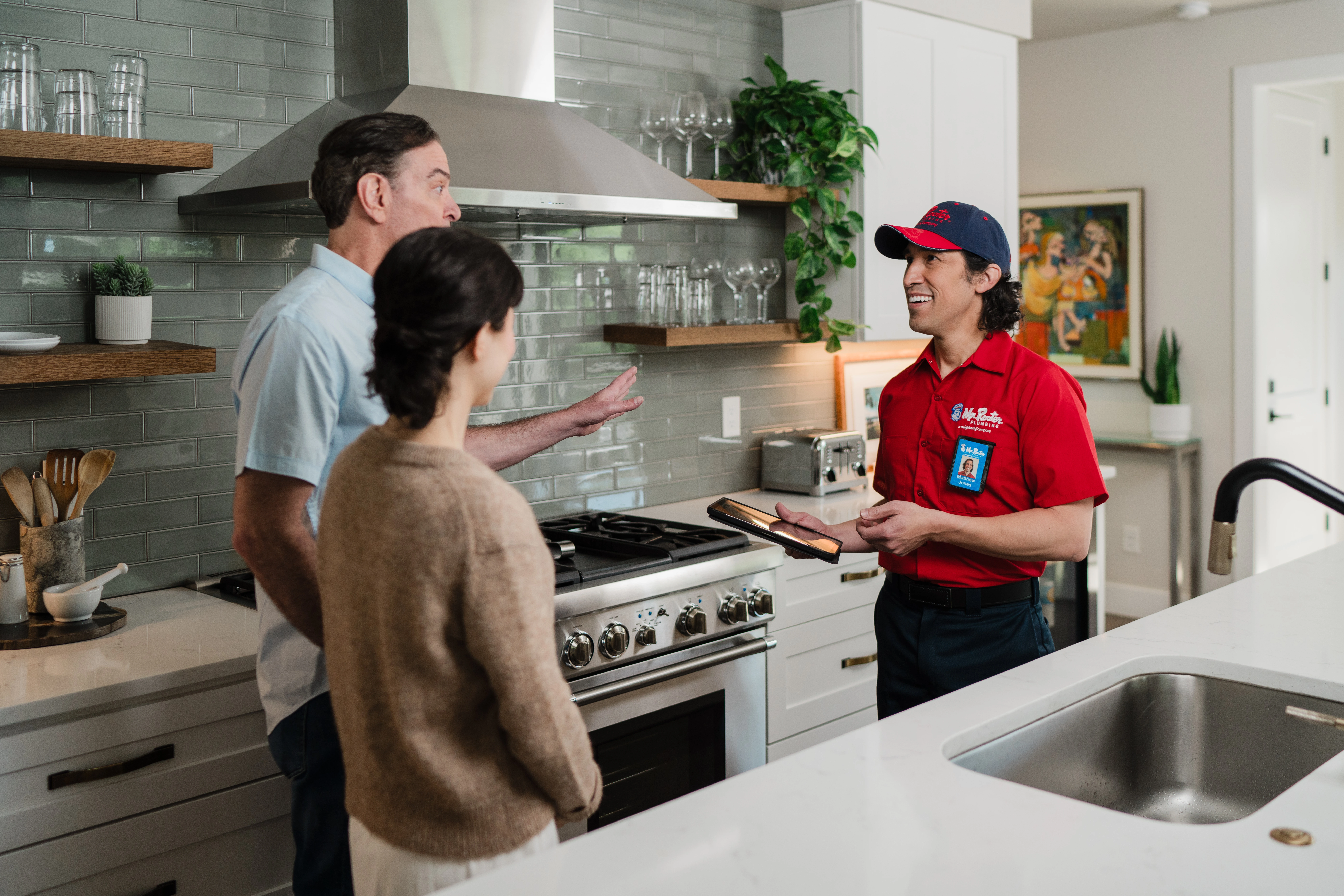
If you notice recurring clogs, unusual odors, inconsistent water pressure, or signs of corrosion, it's time to call in a qualified professional. These issues often indicate deeper problems that can worsen quickly without proper attention.
For expert plumbing inspections, replacements, and routine care, request an appointment from your local Mr. Rooter team. Our professionals provide courteous, reliable plumbing services backed by the Neighborly Done Right Promise® to ensure your satisfaction, every time.
This article is intended for general informational purposes only and may not be applicable to every situation. You are responsible for determining the proper course of action for your home and property. Mr. Rooter Plumbing is not responsible for any damages that occur as a result of this blog content or your actions. For the most accurate guidance, contact your local Mr. Rooter Plumbing location for a comprehensive, on-site assessment.
Annual Home Plumbing Maintenance Checklist FAQs
At Mr. Rooter Plumbing, we’re committed to providing exceptional plumbing services for homes and businesses. Whether you have a clogged drain or need emergency repairs, our team of trusted local plumbers delivers quality, transparency, and customer satisfaction. Explore these FAQs to learn more about home plumbing maintenance.