Various things can block your sewer lines. Some of them are completely out of your control.
A buildup of fat, oil, and grease is one of the most common causes. Many homeowners are now aware of the risks of pouring fat down the drain, but it’s still a major issue. We also see many blockages caused by hygiene products and other debris.
Other causes include tree root intrusions, whereby tree roots snake into sewer lines through cracks, and broken or collapsed pipes.
Inspection, Diagnosis, Cleaning, and Repair
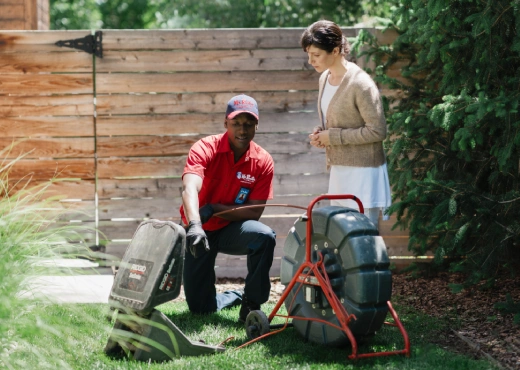
As there are many potential causes of sewer system backups, we’ll begin with a thorough sewer line inspection. Our technicians use high-tech, waterproof cameras to fully inspect the inside of your sewer lines. They’ll scan your lines for blockages and other issues, finding the exact problem and location.
After diagnosing the issue, they’ll discuss it with you and recommend a cleaning using drain augers or hydro jetting. If your pipes are cracked or corroded or have any other damage, we may recommend a repair. We’ll discuss the options in advance and will only conduct repair work after we’ve given you a detailed quote.
What You Can Do to Prevent Future Sewer System Backups
Changing your flushing habits is one of the best things you can do to prevent sewer line blockages in your home:
- Don’t pour grease, fat, or oil down the drain.
- Don’t flush hygiene products.
- Install strainers in sinks and showers to catch hair and debris.
- Don’t plant trees or bushes near sewer lines.
- Schedule regular inspections to find issues before they develop.
Don’t ignore potential sewer line issues, including slow drainage and backups.