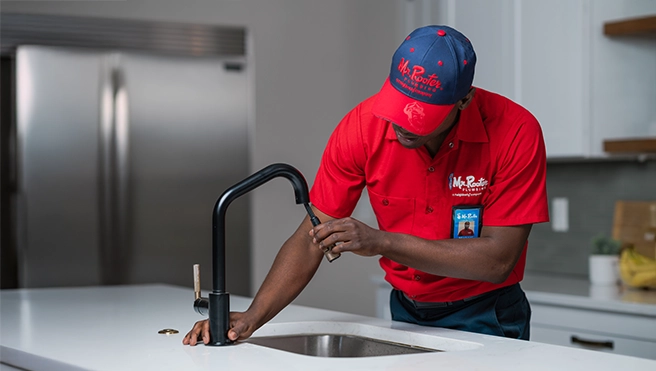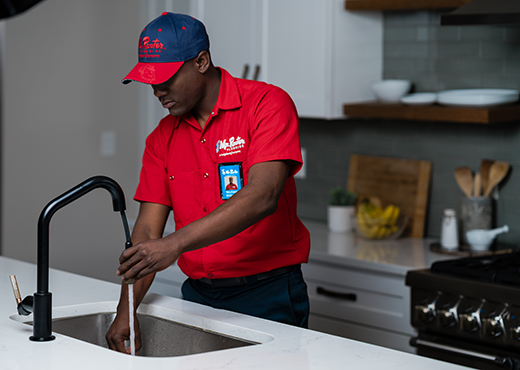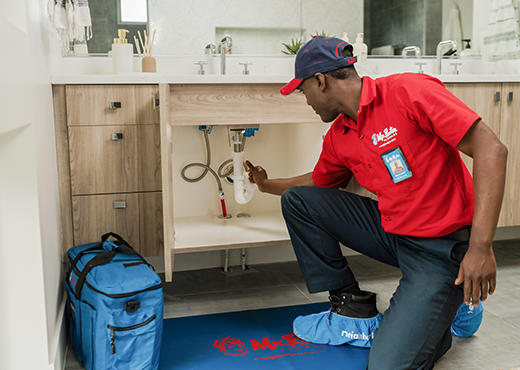

A faucet may gradually become less reliable as components wear down or mineral deposits build up. Recognizing common warning signs can help you determine whether repair or replacement may be appropriate.
Watch for these common indicators:
- Persistent Dripping: A faucet that continues to drip after being turned off may have worn internal components or damaged seals. Depending on the cause, repair or replacement may be appropriate.
- Leaks Around the Faucet Base: Water collecting around the base may indicate worn seals, loose connections, or another issue that needs inspection.
- Difficulty Operating the Handle: Stiff, loose, or difficult-to-turn handles can indicate worn components or mineral buildup.
- Rust or Visible Corrosion: Corrosion or deterioration may affect the faucet's appearance and operation and can be a reason to consider an upgrade.
- Inconsistent Water Flow: Reduced or uneven flow may be caused by a clogged aerator, a supply issue, or another plumbing concern. The underlying cause should be identified before deciding on a solution.
- Outdated Style or Functionality: If your current faucet no longer suits your needs, installing a new model can provide updated features and a different look.
- Sink or Countertop Upgrade: A renovation may require a new fixture that fits the sink configuration and existing plumbing connections.
Not every faucet problem requires replacement. A professional assessment can help determine whether a repair, new fixture, or related plumbing work is the most suitable option.