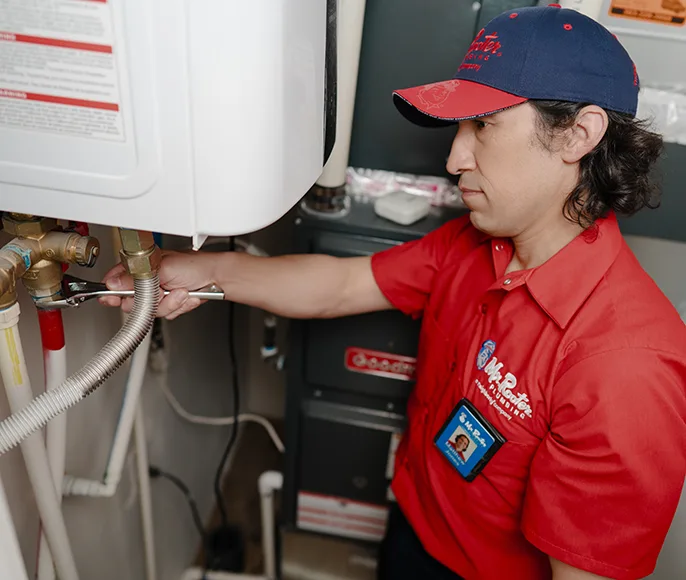
A tankless water heater for homes taps into a fuel source for operation, so households installing their models need skilled service providers like Mr. Rooter Plumbing of Northern Colorado for a proper setup. Fortunately, tankless water heaters can operate using multiple energy types. Some homes rely solely on electricity, while others use a combination of gas and electricity. Propane is also popular for utilities beyond just outdoor grills and fire pits. Whatever primary fuel sources your home uses, there's usually a compatible tankless water heater. Below, we've outlined the three main types of tankless water heaters for your information:
- Electric-powered tankless water heaters
- Gas-powered tankless water heaters
- Propane-powered tankless water heaters
Benefits of Using a Tankless Water Heater
Mr. Rooter Plumbing of Northern Colorado gladly advises you on installing a tankless water heater at your home, with gas, electric, and propane options. These appliances are a stellar choice because of their convenience, reliability, and energy savings. Tankless water heaters provide your baths, showers, cooking, and laundry with limitless hot water. There's no need to wait for your tank to refill with water or get up to temperature whenever you use a substantial amount of water. The spouses, children, relatives, and guests in your household all have individual schedules. With this in mind, reliable hot water is mandatory to meet everyone’s cleaning, washing, and cooking needs. Tankless water heaters might not be ideal for every household, but they do provide a host of benefits that no homeowner can ignore. The cost of installing a tankless water heater is a sizable home investment for residents. However, many people find that the benefits of their new water heater outweigh the initial installation costs. We've listed some of the compelling benefits below:
- Low operation costs
- Smaller space required
- Increased property value
- Energy-efficient operation
- Beneficial to the environment
- Less risk of water damage
- Longer lifespan than storage water heaters