Pittsburgh's plumbing challenges differ from those you'd find in a flat, newer city. The freeze-thaw cycles that hit Allegheny County every winter cause ground movement that shifts clay sewer laterals and opens gaps at pipe joints, giving tree roots exactly the entry point they need. Root growth is one of the most common causes of blocked sewer lines we diagnose in older neighborhoods like Squirrel Hill, Shadyside, and Point Breeze, where mature tree canopies line every block.
Pittsburgh also operates a combined sewer system across many of its older districts, meaning stormwater and sanitary sewage share the same underground pipes. During heavy rain events, that system gets overwhelmed, and the resulting surcharge pushes sewage back through private sewer laterals and into basement floor drains. A backwater valve installed on your main sewer line is the most reliable mechanical protection against this type of backup, and a camera inspection confirms whether your lateral is in good enough condition to handle that installation.
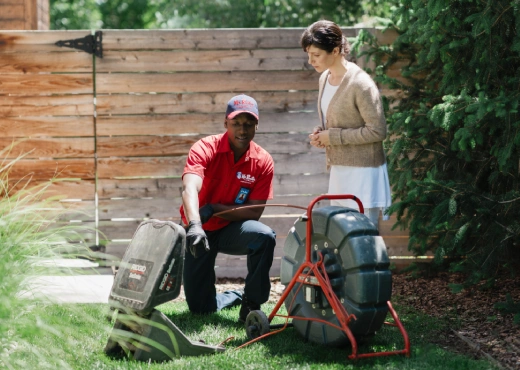
Homes built before the mid-1950s often have clay tile sewer laterals and cast iron drain stacks, both of which require a different approach than modern PVC. Cast iron corrodes from the inside over time, narrowing the effective diameter of the pipe and creating a rough interior surface where debris can catch and accumulate. Hydrostatic pressure in Pittsburgh's hillside neighborhoods, including Mount Washington, Troy Hill, and Carrick, adds stress to pipes on steep grades and in low-lying areas near the river valleys. Before recommending any drain cleaning method on an older home, our team runs a camera inspection to assess the actual pipe condition, because applying high-pressure hydro jetting to a compromised pipe can cause more damage than the original clog.
The Pittsburgh Water and Sewer Authority (PWSA) maintains the public sewer main under the street, but the sewer lateral from your foundation to the connection point at the main is your responsibility as a homeowner. If a camera inspection shows the damage starts inside your property line, the repair falls to you. Documentation from a video camera inspection is also the most effective evidence when disputing responsibility with PWSA or filing a claim with your homeowner's insurance carrier.