Older homes in Muskegon and Norton Shores were built when cast iron and clay tile drain lines were the standard. Cast iron holds up for decades, but once corrosion takes hold, the pipe walls thin out, crack, and eventually collapse. Clay tile is even more vulnerable, especially to shifting soil and root intrusion from nearby trees. Drain bellies are another common problem: when soil beneath a pipe settles, a section sags and creates a low spot where waste and water pool instead of flowing through. That pooling accelerates corrosion, causes recurring clogs, and produces sewage odors that no amount of drain cleaner reaches.
Root intrusion rounds out the list. Roots follow moisture and find their way into any small crack or joint gap in a drain line. Once inside, they grow and eventually block flow entirely. We find root damage regularly in older Muskegon County neighborhoods where the homes and the mature trees went in around the same time.
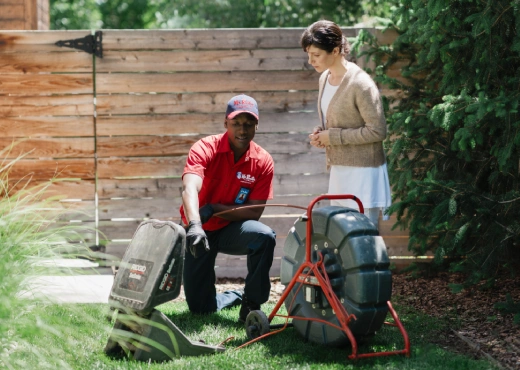
We run a sewer camera inspection down the line before recommending any repair. Cracked section, root intrusion, belly, offset joint, whatever's there, you'll see the footage yourself. We walk you through the findings in plain language.