Commercial Plumbing Maintenance: Quick AnswerCommercial plumbing maintenance is a set schedule of tests, cleanings, and checks that keeps a building's water, drain, and hot water systems working and in line with local rules. The core tasks are backflow testing, drain and sewer line care, water heater service, routine leak checks, and grease interceptor service for buildings with commercial kitchens. How often each task happens depends on the building type, how heavily it's used, and local requirements.
|
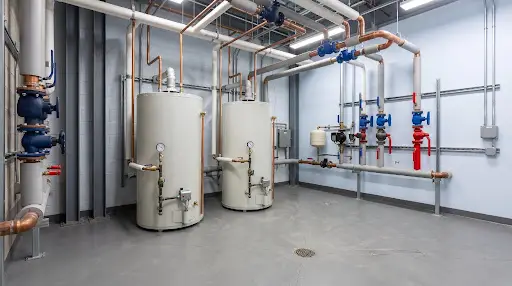
Commercial plumbing maintenance keeps your building open, your tenants comfortable, and your property in line with local water and sewer rules. For most properties, that means a set schedule of backflow testing, drain and sewer line cleaning, water heater service, and leak checks, plus grease interceptor pumping if you have food service tenants. A written schedule built with a team that handles commercial plumbing services turns these tasks into routine work, so fewer of them turn into after-hours calls.
What goes on your schedule depends on the kind of building you manage. Three things change the plan the most: who uses the water, how hot water is made and delivered, and whether the building has a commercial kitchen.
- Offices and retail centers: Restrooms and break rooms get steady daytime use. Quiet nights and weekends make hidden leaks easier to spot on the water meter.
- Apartments, hotels, and senior living: Many units share a central hot water system, so hot water temperature and low-use fixtures need extra attention.
- Restaurants and other food service tenants: Grease interceptors and kitchen drain lines need the most frequent service.
What Should a Commercial Plumbing Maintenance Schedule Include?
Use this table as a starting point. Then adjust each task for your building's age, usage, water quality, and local requirements.
| Task | Typical timing | What can change it |
| Walk restrooms, kitchens, and mechanical rooms for drips, running toilets, and wet spots | Daily to weekly | Building size and staff coverage |
| Read the water meter and compare water bills | Monthly | Seasonal use, irrigation, and occupancy changes |
| Add water to rarely used floor drains | Monthly | Trap primers, which refill traps automatically |
| Test backflow prevention assemblies | Often once a year | Your water utility's rules |
| Pump grease interceptors | Before grease and solids reach 25% of the tank, under many local rules | Kitchen volume, interceptor size, and local rules |
| Flush tank water heaters | At least once a year | Hard water and the manufacturer's manual |
| Clean main drain lines and camera-inspect sewer lines | Based on the building's clog history | Pipe age and material, grease, and tree roots |
| Check that main and branch shutoff valves turn and close | During scheduled plumbing inspections | Valve age and how long since they were last used |
Which Plumbing Systems Need Scheduled Testing and Service?
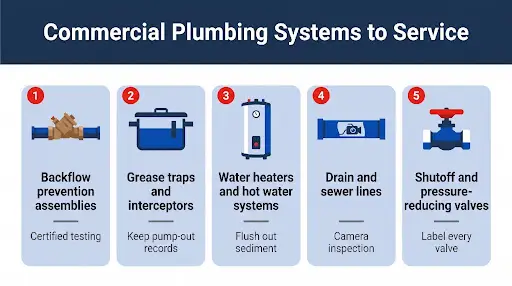
These five systems need regular testing or service. Each one has its own schedule, and some have reporting rules set by your water utility or city.
Backflow prevention assemblies
Backflow happens when a drop in supply pressure, or higher pressure inside the building, sends water from building equipment back toward the drinking water supply. Backflow prevention assemblies stop that at connections such as irrigation systems, fire sprinkler lines, boilers, and some kitchen equipment.
Many water utilities require each assembly to be tested at least once a year by a certified backflow tester. Many also require the results to be filed with the utility. Check your utility's deadline and form, since the rules vary by city. An assembly that fails its test needs backflow preventer repair or replacement and a passing retest.
Grease traps and interceptors
If your building has restaurants, cafeterias, or other commercial kitchens, the grease interceptor needs the most frequent service. Fats, oils, and grease float to the top of the tank while food solids settle to the bottom. Many local rules require pumping before grease and solids together fill 25% of the interceptor.
Cleaning and pumping schedules vary by interceptor size, kitchen volume, and local requirements. Some jurisdictions set minimum service intervals in addition to requiring service before grease and solids reach a specified percentage of the interceptor's capacity. Generally, small indoor units often need cleaning at least monthly, and large outdoor interceptors are often serviced at least every three months. Busier kitchens may need service more often.
Regular grease trap pumping keeps grease out of the sewer line, and every pump-out should come with a record you keep on file.
Water heaters and hot water systems
Sediment settles in the bottom of tank water heaters, especially with hard water. It can make the heater work harder and cause rumbling or popping sounds. Many manufacturers call for flushing at least once a year, and more often where the water is hard. Tankless units need descaling on the schedule in their manual.
Have a plumber test the temperature and pressure relief valve on the schedule the manufacturer sets. They should also check fittings and the area around each tank for leaks or rust. A heater that leaks from the tank itself usually needs commercial water heater replacement.
Drain and sewer lines
Commercial drains carry heavier loads than home drains. Grease, wipes, paper products, and tree roots are common causes of backups. Repeat clogs in the same area usually point to buildup or damage farther down the line.
A sewer camera inspection shows what's inside the pipe, such as grease, roots, sagging sections, or cracks, so you can choose the right fix. Drain jetting uses high-pressure water to scour buildup from pipe walls, and routine commercial drain cleaning keeps lines with a history of clogs flowing.
Shutoff and pressure-reducing valves
During a leak, your staff needs to close the right valve fast. Label the main shutoff and the branch valves for each floor, unit, or tenant space. Then have a plumber check that each one turns and closes fully, since valves that sit untouched for years can seize. A valve that won't close needs shutoff valve repair or replacement.
Many buildings also have a pressure-reducing valve on the incoming water line. The International Plumbing Code requires a pressure-reducing valve when static water pressure within a building exceeds 80 psi, although locally adopted codes may differ. If pressure readings creep up over time, have the valve checked, since high pressure strains fixtures and supply lines.
Your local Mr. Rooter Plumbing® service professionals can set up a service schedule for these systems, so testing and cleaning happen before small problems turn into shutdowns.
What We Commonly Find During Commercial Plumbing Inspections
During commercial plumbing inspections, our service professionals frequently discover hidden leaks through unexplained increases in water usage, neglected grease interceptors that are overdue for service, shutoff valves that have not been exercised in years and no longer close completely, water heater sediment buildup, and drain lines with recurring grease or root intrusion.
How Can You Catch Hidden Leaks Before Tenants Report Them?
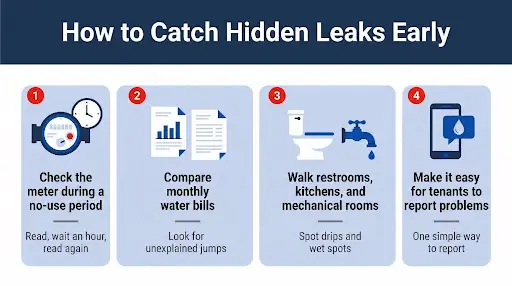
Leaks in commercial buildings often run for weeks before anyone sees water. These four habits help your team find them early.
Check the meter during a no-use period
Pick a time when no water should be running, such as after closing. Shut off equipment that uses water on its own schedule, like irrigation and ice machines. Read the meter, wait an hour, and read it again. If the number changed, water is going somewhere.
Compare monthly water bills
Compare each bill with the month before and the same month last year. A jump that weather, occupancy, or irrigation can't explain may point to a leak in the supply lines or inside the building. Submeters on large uses, such as irrigation, make the source easier to find.
Walk restrooms, kitchens, and mechanical rooms
A single leaky or running toilet can waste 200 gallons of water or more a day. Regular walk-throughs help staff catch running toilets and urinals, dripping faucets, stained ceiling tiles, and puddles near water heaters and pumps. When the meter shows a leak no one can find, commercial leak detection can pinpoint it behind walls or under floors.
Make it easy for tenants to report problems
Tenants often notice slow drains, odors, and running fixtures first. Give them one simple way to report plumbing issues. Respond quickly to water stains, sewer smells, and gurgling drains, since these can signal leaks or drain line problems.
What Do Shared Hot Water Systems Need to Lower Legionella Risk?
Legionella bacteria can grow in building water systems. People can get Legionnaires' disease by breathing in small droplets of contaminated water, such as shower mist. Legionella grows best in water between 77°F and 113°F, and it thrives where water sits still, like low-use fixtures and capped-off pipe sections.
The CDC recommends evaluating the need for a Legionella water management program when a building has characteristics such as:
- A healthcare facility where patients stay overnight
- Housing mainly for residents older than 65, such as assisted living
- Multiple housing units with a centralized hot water system, like a hotel or high-rise apartment building
- Over 10 stories, including basement levels
A water management program sets target water temperatures, flushing routines for low-use fixtures, and what to do when readings drift. CDC guidance calls for storing hot water above 140°F and keeping circulating hot water at or above 120°F. Because those temperatures can create a scalding risk, thermostatic mixing valves may be used to reduce water temperature at fixtures while maintaining higher temperatures elsewhere in the system. Some states and cities set their own requirements, so check with your local health department.
Which Tasks Can Your Maintenance Staff Handle?
Building staff can handle routine checks. Work that involves certified testing, gas, permits, or opening up lines belongs with a licensed plumber as required by local regulations.
Staff can usually:
- Walk the building and log drips, running fixtures, and wet spots
- Read the water meter and track monthly use
- Add water to rarely used floor drains
- Keep strainers on kitchen and floor drains and keep grease out of sinks
- Know where every shutoff valve is
Call a licensed plumber or certified tester for:
- Backflow testing and repair
- Grease interceptor pumping and repair
- Relief valve testing, water heater repair, and any gas appliance work
- Drain jetting, camera inspections, and sewer line repair
- Leaks inside walls, ceilings, or slabs
How Should You Track Plumbing Maintenance?
Good records help you pass inspections, plan budgets, and spot problems that keep coming back. Keep these in one place:
- Backflow test reports and the dates they were filed
- Grease interceptor pump-out records, which local inspectors may ask to see
- Water heater service dates, model numbers, and install years
- Camera inspection findings and drain cleaning dates by location
- Monthly meter readings and water bills
Reviewing these records once a year makes it easier to plan repairs and replacements before equipment fails.
Continue Your Research
- What to Expect During a Backflow Preventer Inspection
- The Benefits of Hydro-Jetting
- Floor Drain Maintenance Tips: How to Keep Drains Clear and Odor-Free
Schedule Commercial Plumbing Maintenance With Mr. Rooter Plumbing
Your local Mr. Rooter Plumbing service professionals can help you build a maintenance schedule that fits your building, from backflow testing and grease trap service to drain cleaning and water heater care. They're licensed and insured and provide commercial plumbing services for restaurants, hotels, offices, shopping centers, and assisted living facilities.
Every job is backed by the Neighborly Done Right Promise®. Contact your local Mr. Rooter Plumbing service professionals.
FAQs About Commercial Plumbing Maintenance
Mr. Rooter Plumbing is a one-stop solution for all your plumbing service needs. Whether you need a pipe repaired, clogs cleared, or drains cleaned, you can count on our experienced team to get the job done right! Our commitment to exceptional service includes answering your questions. Here are answers to some of your most frequently asked questions about commercial plumbing maintenance.
AI Disclosure: This article may contain content, images, and/or multimedia generated with the assistance of artificial intelligence (AI). While we make every effort to review, edit, and ensure accuracy, completeness, and alignment with our content standards, we also encourage readers to verify facts, consult trusted professionals, and use their own judgment when making decisions based on their specific situation.
This article is intended for general informational purposes only and may not be applicable to every situation. You are responsible for determining the proper course of action for your home and property. Mr. Rooter Plumbing is not responsible for any damages that occur as a result of this blog content or your actions. For the most accurate guidance, contact your local Mr. Rooter Plumbing location for a comprehensive, on-site assessment.