Fall Plumbing Maintenance: Quick ChecklistFall plumbing maintenance can help reduce the risk of frozen pipes, water damage, and drain backups as the weather turns cold. Finish outdoor tasks before the first hard freeze, then test the systems you rely on all winter. Timing depends on your climate and your foundation type: basement, crawl space, or slab.
|
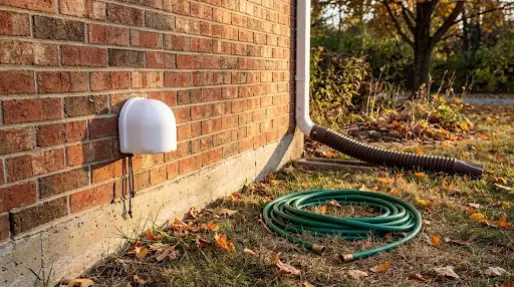
Fall plumbing maintenance comes down to three jobs:
- protect anything outdoors that holds water before the first hard freeze,
- test the systems you'll rely on all winter
- clear drains before fall leaves and holiday cooking lead to clogs.
Many of the basic tasks are homeowner-friendly and can be completed in one weekend, while others depend on your plumbing system and comfort level. The right order and timing depend on your climate and your home's foundation type: basement, crawl space, or slab.
Start outside while the weather is still mild, then move indoors to pipes that run through cold spots. Insulating exposed pipes before temperatures drop is one of the simplest ways to lower the risk of a frozen or burst pipe.
When Should You Start Fall Plumbing Maintenance?
Start when overnight lows begin dipping toward freezing, and finish outdoor tasks before the first hard freeze in your forecast. A hard freeze is typically 28°F or colder for several hours. In many northern states, that point arrives in October. In milder climates, it may not come until late November or December, and some years it barely arrives at all.
Your climate decides how much of this checklist applies:
- Freezing climates: Regular hard freezes mean every outdoor and cold-spot task on this list applies.
- Mild climates: Occasional cold snaps still call for covering outdoor faucets and protecting exposed pipes. Drain, water heater, and sump pump checks apply everywhere.
Your foundation changes the list too. Homes with basements or crawl spaces have more exposed pipes to check and may have a sump pump to test. Slab homes usually have fewer exposed pipes, but outdoor faucets, drains, and the water heater still need attention.
| Task | Best time | Applies to |
| Disconnect hoses and drain outdoor faucets | Before the first hard freeze | All homes; essential in freezing climates |
| Drain or blow out sprinkler lines | Before the ground freezes | Homes with in-ground irrigation |
| Clear gutters, downspouts, and yard drains | After most leaves fall, before heavy rain or snow | All homes |
| Insulate exposed pipes | Before overnight lows reach freezing | Pipes in crawl spaces, garages, attics, and exterior walls |
| Test the main water shutoff valve | Any mild day this fall | All homes |
| Flush or descale the water heater | Once a year or as the manual directs | Tank and tankless water heaters |
| Test the sump pump | Before fall rains and again before the spring thaw | Homes with a sump pit |
| Fix slow drains | Before holiday cooking and guests | All homes |
What Should You Do Outside Before the First Hard Freeze?
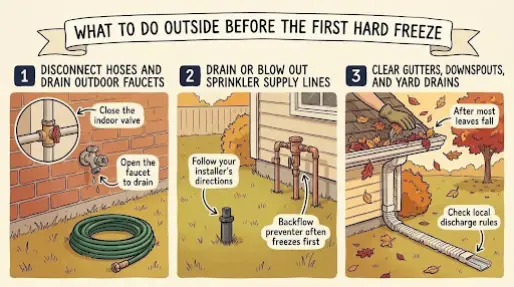
Water left in outdoor fixtures expands as it freezes, which can split a faucet or the pipe behind the wall. That kind of leak often goes unnoticed until the faucet is turned on again in spring.
Disconnect hoses and drain outdoor faucets
Remove, drain, and store garden hoses. Then close the indoor valve that supplies each outdoor faucet, if your home has one, and open the outdoor faucet so the remaining water drains out. Leave it open through winter so any trapped water has room to escape.
Frost-free faucets still need the hose removed. A connected hose holds water in the faucet, where it can freeze and crack the valve inside the wall. Foam faucet covers and freeze-proof outdoor faucets add more protection in freezing climates.
Drain or blow out sprinkler supply lines
In-ground irrigation lines need to be drained before the ground freezes. Follow the manufacturer's or installer's directions for your system. Systems winterized with compressed air are typically handled by an irrigation professional, since too much pressure can damage pipes and fittings.
The backflow preventer sits above ground, so it's often the first part to freeze. Some water utilities also require yearly backflow testing, so check your local rules.
Clear gutters, downspouts, and yard drains
Wait until most leaves have fallen, then clear gutters, downspouts, and any yard or area drains before heavy rain or snow. Clogged gutters overflow next to the foundation, which can push water toward basements and crawl spaces and keep a sump pump running nonstop.
Check that downspouts discharge water a safe distance from the foundation. Some local guidelines call for discharge at least 2 feet from the foundation of homes without basements and at least 6 feet from basement walls. You also want to be sure to follow any drainage requirements from your city, county, or local building authority.
Which Indoor Pipes Need Protection From the Cold?
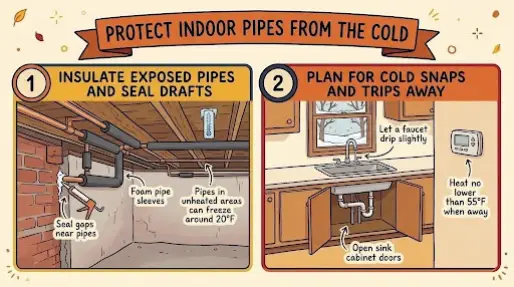
The pipes most likely to freeze run through unheated or poorly insulated spaces. Check these spots first:
- Crawl spaces and unfinished basements
- Attached garages
- Attics
- Exterior walls, including under kitchen and bathroom sinks on outside walls
- Areas near foundation vents or gaps in siding
Insulate exposed pipes and seal drafts
Foam pipe sleeves are an easy fix for pipes you can reach. For pipes in very cold spots, heat cable made for water pipes adds protection when it's installed according to the product directions. Pipes in unheated areas are especially vulnerable and can begin to freeze once outdoor temperatures drop to around 20°F, so finish this step before the first deep cold snap.
Seal gaps where cold air reaches pipes, such as around rim joists, dryer vents, and pipe openings in exterior walls.
Plan for cold snaps and trips away
During extreme cold, open the cabinet doors under sinks on exterior walls so warm air can reach the pipes, and let a faucet served by exposed pipes drip slightly. If you'll be away during cold weather, leave the heat on and set no lower than 55°F. For longer trips in freezing climates, some homeowners also shut off the main water supply and drain the lines, which a plumber can help with.
Which Plumbing Systems Should You Test Before Winter?
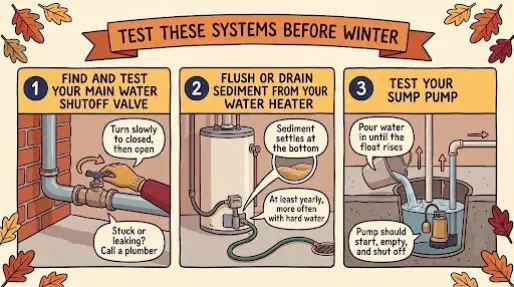
Fall is a good time to confirm that the systems you'd need in a winter emergency actually work. A stuck shutoff valve or a failed sump pump is much easier to fix on a mild day than during a storm or a burst pipe.
Find and test your main water shutoff valve
The main shutoff is usually where the water line enters your home, often in a basement, crawl space, utility room, or garage, or near the water heater. In some warm-climate homes, it's outside near the foundation or in a box near the water meter. Label it so everyone in your home can find it fast.
Turn the handle slowly to closed, then back open. If it won't move, leaks at the stem, or doesn't fully stop the water, don't force it. Older valves can break under force, so leave repairing or replacing a worn shutoff valve to a plumber.
Flush or drain sediment from your water heater
Tank water heaters collect sediment from minerals in the water. Water heater maintenance schedules vary by model and water conditions, so follow your owner’s manual for flushing or draining instructions. Mineral buildup may require more frequent attention than once per year in areas with hard water. Fall works well because it comes before the heaviest hot water use of the year.
Tankless water heaters may also require flushing or descaling, usually once per year. Follow the manufacturer’s maintenance schedule, which may vary based on the model and your water hardness.
While you're checking either type, look for these signs:
- Popping or rumbling sounds while the water heats
- Rusty or discolored hot water
- Moisture or pooling water around the base
- A temperature and pressure relief valve that drips or discharges
The temperature and pressure relief valve is a safety device. Test it only as your manual directs, since it releases scalding water, and call a pro if it won't reseat or keeps dripping. A service professional can tell you whether these signs call for water heater repair or replacement.
Test your sump pump
If your home has a sump pit, test the pump before fall rains and again before the spring thaw. Slowly pour a bucket of water into the pit until the float rises. The pump should turn on, empty the pit, and shut off on its own.
Then check that the discharge line outside is clear of leaves and directs water away from the house, since a frozen or blocked line can send water back toward the pit. If the pump doesn't start, runs constantly, or grinds, have it checked before heavy rain. Your local Mr. Rooter Plumbing® service professionals can handle sump pump repair and replacement and help you decide whether a battery backup makes sense for your home.
How Can You Get Drains Ready for Holiday Cooking and Guests?
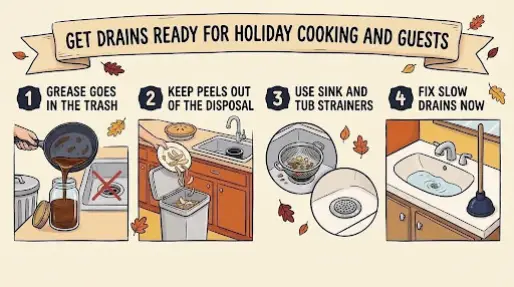
Fall ends with the busiest stretch of the year for most kitchens and bathrooms. More cooking and more overnight guests put extra load on drains, garbage disposals, and toilets. A few habits keep things moving:
- Pour cooled cooking grease into a sealed container for the trash, never down the drain.
- Scrape plates into the trash before rinsing, and keep fibrous or starchy scraps like potato peels out of the disposal.
- Run cold water while the disposal is on and for a few seconds after.
- Use sink and tub strainers to catch food and hair.
Fix slow drains now. A drain that slows, gurgles, or smells before the holidays usually gets worse with heavy use. A plunger or drain snake can clear many simple sink clogs, while harsh chemical drain cleaners may cause damage to some pipes.
If several drains are slow at once, or water backs up into a tub or floor drain when you run the washer or flush a toilet, the problem may be in the main sewer line. That calls for professional drain cleaning and possibly a camera inspection.
Which Fall Plumbing Tasks Can You DIY, and When Should You Call a Pro?
Most of this checklist is homeowner friendly. Disconnecting hoses, clearing gutters, adding pipe sleeves, and testing a sump pump take simple tools. If you have a gas water heater and aren't comfortable shutting it down and relighting it, leave the flush to a pro. Call a plumber when:
- The main shutoff valve is stuck, leaking, or doesn't fully stop the water
- An outdoor faucet drips after it's shut off or leaks inside the wall
- You can't safely reach pipes in a crawl space or attic
- Your water heater leaks, makes loud noises, or has a dripping relief valve
- The sump pump won't start, runs nonstop, or the pit overflows
- Several drains are slow at once, or drains back up into tubs or floor drains
Continue Your Research
- Preparing Your Plumbing for Winter
- How to Prevent Your Pipes From Freezing
- Leaf-Induced Blockages and Winterization
Get Your Plumbing Ready for Winter With Mr. Rooter
Some fall checks are quick DIY jobs, and others are safer to hand off. Your local Mr. Rooter Plumbing service professionals can test and repair shutoff valves, flush and service water heaters, clear slow drains, and insulate exposed pipes before the first hard freeze.
Every job is backed by the Neighborly Done Right Promise®. Schedule with your local Mr. Rooter now.
FAQs About Fall Plumbing Maintenance
Mr. Rooter Plumbing is a one-stop solution for all your plumbing service needs. Whether you need a pipe repaired, clogs cleared, or drains cleaned, you can count on our experienced team to get the job done right! Our commitment to exceptional service includes answering your questions. Here are answers to some of your most frequently asked questions about fall plumbing maintenance.
This article may contain content, images, and/or multimedia generated with the assistance of artificial intelligence (AI). While we make every effort to review, edit, and ensure accuracy, completeness, and alignment with our content standards, we also encourage readers to verify facts, consult trusted professionals, and use their own judgment when making decisions based on their specific situation.
This article is intended for general informational purposes only and may not be applicable to every situation. You are responsible for determining the proper course of action for your home and property. Mr. Rooter Plumbing is not responsible for any damages that occur as a result of this blog content or your actions. For the most accurate guidance, contact your local Mr. Rooter Plumbing location for a comprehensive, on-site assessment.