Plumbing Emergencies: Quick AnswerA plumbing emergency is a problem that keeps causing water damage, exposes your household to sewage or gas, or leaves you without water or a working toilet when waiting would make things worse. Stop the water or leave the home first, then call for help. A small leak you can fully stop at a nearby shutoff valve can often wait for a regular appointment.
|
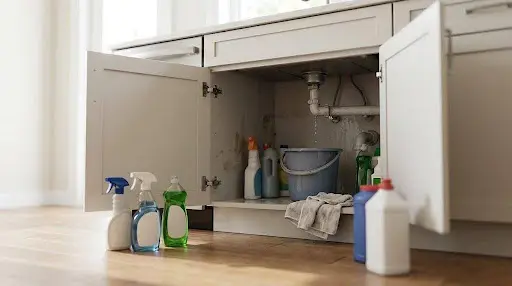
A plumbing emergency is any problem that can cause serious water damage, expose your household to sewage or gas, leave you without water or a working toilet, or become more severe if not addressed promptly. If water won't stop after you close the nearest shutoff valve, sewage is coming up through a drain, or you smell gas, get help right away. Most other problems, like a slow drain or a dripping faucet, can wait for a regular appointment.
Three things decide how urgent a problem is: whether you can stop the water, where the water or waste is going, and the weather. A drip you can shut off at a fixture valve can often wait until business hours. A leak you can't stop can't wait, especially when it's soaking a finished ceiling or reaching an electrical panel. Freezing weather raises the stakes, since frozen pipes can split. When a problem can't wait, a plumber who handles emergency plumbing repairs can stop the source before the damage spreads.
What We Commonly See During Emergency Calls
During emergency service calls, Mr. Rooter Plumbing® service professionals most commonly encounter:
- Burst supply lines
- Sewer backups
- Frozen pipes
- Water heater leaks
Each of these is covered below, along with the first steps to take before help arrives.
How Do You Know if a Plumbing Problem Is an Emergency?
Ask yourself three questions. If the answer to any of them is yes, treat the problem as an emergency.
- Is water still flowing after you close the shutoff? If the fixture valve or the main shutoff won't stop the leak, or you can't find or turn the valve, the damage keeps growing until the water is off.
- Is there sewage, gas, or water near electricity? These bring health and safety risks on top of property damage.
- Will waiting make it worse? Freezing temperatures, a sump pump that fails during heavy rain, or losing your only working toilet can turn a manageable problem into a bigger one overnight.
Use this quick guide to sort common problems:
| Problem | Usually an emergency when | Can often wait when |
| Leaking or burst pipe | Water won't stop, or it's spreading into ceilings, walls, or near electrical | It's a small drip you can shut off at a nearby valve |
| Clogged toilet | It's your only toilet, or it overflows and won't stop | Another toilet works and a plunger clears it |
| Drain backup | Sewage comes up in tubs, showers, or floor drains | One drain is slow and nothing is backing up |
| Water heater | The tank is leaking, or you smell gas near it | Water is lukewarm, with no leak and no gas smell |
| No water | Pipes may be frozen during freezing weather | Neighbors have no water too, which points to a utility outage |
| Sump pump | It stops working during heavy rain and water is rising | It still empties the pit but sounds louder than usual |
Which Plumbing Problems Need Help Right Away?
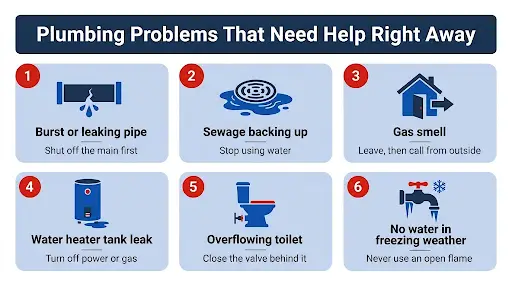
These six situations need fast action. You can take the first step yourself in most of them, then call a plumber. A gas smell is different: get out and call your gas utility first.
Burst or leaking pipe
A burst pipe can release a lot of water quickly, and it often soaks into drywall, flooring, and insulation before you see it. Signs include water stains that keep growing, bubbling or sagging ceiling paint, a sudden drop in water pressure, or the sound of running water when nothing is on.
Shut off the main water supply first, then call for pipe leak repair. Pipes in exterior walls, crawl spaces, garages, attics, and other poorly insulated areas can be especially vulnerable in freezing weather.
Sewage backing up
Sewage coming up through a tub, shower, or basement floor drain usually points to a blocked or damaged main sewer line. Another early sign is one fixture affecting another, such as a toilet that gurgles or a tub that fills when the washer drains.
Stop using water right away, including flushing toilets and running the dishwasher or washer, and keep children and pets away from the area. Raw sewage carries germs, so avoid contact when possible. If you must enter the area, wear waterproof gloves and boots and appropriate eye protection. Sewer backup service clears the line, and a camera inspection may help identify the location and cause of the blockage. If your home has a septic system, a full tank or failing drain field can cause the same symptoms.
Gas smell
Natural gas has an added odorant that smells like rotten eggs, and a leak may also make a hissing sound. If you smell gas, leave the house right away. Don't flip light switches, use your phone, or start a car in an attached garage until you're safely away, since a spark can ignite the gas.
Call your gas utility or 911 from outside, and don't go back in until the utility says it's safe. Don't try to find the leak or shut off gas valves at appliances yourself. Once the utility has made the home safe, a plumber can handle gas line repair.
Water heater tank leak
Water under a tank water heater can come from a loose fitting, the drain valve, the temperature and pressure relief valve, or the tank itself, so find where the water starts before deciding what to do. A drip from a fitting can often wait a short time if a pan catches it. A leak from the tank body usually can't be repaired and means planning for a replacement. A relief valve that keeps discharging also needs a pro, since it can signal too much heat or pressure in the tank.
If the tank itself is leaking, shut the unit down. For an electric unit, turn off the power at the breaker. For a gas unit, follow the manufacturer's instructions for shutting down the water heater. This may be setting the gas control to off or pilot. If you smell gas, don't touch the controls; leave the home and call your gas utility or 911 from a safe location.
If you can shut off the gas or turn off the power, close the cold water supply valve on the pipe above the tank next. The water inside can be scalding, so keep your hands clear. A service professional can tell you whether you need water heater repair or replacement.
Overflowing toilet
Turn the shutoff valve behind the toilet clockwise to stop the water. If the valve is stuck, lift the tank lid, press the flapper closed so no more water flows into the bowl, and lift the float so the tank stops refilling. If the valve won't close or the toilet continues overflowing, stop using the fixture and call for help.
A clog in your only toilet is urgent for most households. If the toilet clogs again and again, or tubs and floor drains back up at the same time, the problem may be in the main sewer line.
No water in freezing weather
If faucets give only a trickle or nothing at all during a cold snap, a pipe may be frozen. Check with neighbors or your water utility first, since an outage affects the whole street. A frozen pipe can split, and leaks often show up as the ice melts.
Keep the faucet open and warm the pipe gently with a hair dryer or electric heating pad, starting near the faucet and working back. Never use a torch or other open flame. If you can't find the frozen section, or water starts leaking, shut off the main and call for frozen pipe repair.
What Should You Do While You Wait for a Plumber?
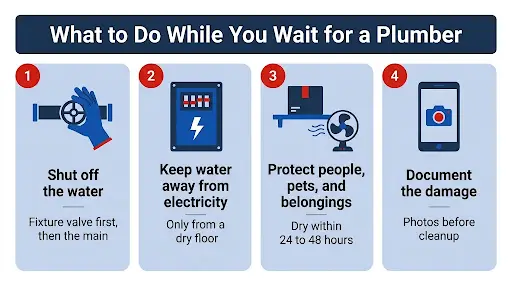
A few quick steps can limit water damage while help is on the way. If you smell gas, skip these steps: leave the house and call your gas utility from outside.
Shut off the water
If the leak is at a sink, toilet, or appliance, close that fixture's valve first. If water is coming from a pipe in a wall or ceiling, or the fixture valve won't stop it, close the main shutoff. It's usually where the water line enters your home, often in a basement, crawl space, utility room, or garage. In some warm-climate homes, it's outside near the foundation or in a box near the water meter.
After the main is off, open a faucet on the lowest floor to drain the water left in the pipes.
Keep water away from electricity
If water is near outlets, appliances, or your electrical panel, don't touch electrical equipment in the wet area. You may turn off power at the breaker only if you can reach the panel safely without entering or standing near water. If water has reached the panel, outlets, or electrical equipment, stay out of the area and contact an electrician or your electric utility.
Protect people, pets, and belongings
Keep children and pets away from standing water and sewage. Move rugs, electronics, and boxes to a dry spot, and set out buckets or towels to catch drips. Clean water can be removed with a wet/dry vacuum. Professional cleanup is a good idea when sewage reaches carpet, finished living areas, or air ducts.
Dry water-damaged areas and materials as quickly as possible, ideally within 24 to 48 hours, to help prevent mold. Once the water source is stopped and there are no electrical or contamination hazards, use appropriate ventilation and drying equipment.
Document the damage
Take photos and video of the water, the source, and anything damaged before you clean up. Keep receipts for repairs and cleanup, and call your insurance company to ask what your policy covers.
Which Plumbing Problems Can Usually Wait?
Many plumbing problems are annoying but stable. These can usually wait for a scheduled appointment, as long as nothing changes:
- A dripping faucet or showerhead
- A toilet that runs after flushing
- One slow drain, with other drains working normally
- Low water pressure at a single fixture
- A clogged toilet when another toilet in the home works
- Lukewarm water with no leak and no gas smell
Watch for changes. A drip that turns into a steady stream, a slow drain that starts backing up into other fixtures, or a water stain that grows means the problem has become urgent. Your local Mr. Rooter Plumbing® service professionals can fix these during a regular appointment, and repairing them early is usually simpler than waiting until a part fails.
How Can You Prepare Before a Plumbing Emergency Happens?
A little prep now can save you from searching for a valve while water is spreading:
- Find your main shutoff valve, label it, and make sure everyone in your home knows where it is.
- Test the main valve once a year. If it won't turn or doesn't fully stop the water, have a plumber repair or replace the shutoff valve.
- Learn where the fixture valves are under sinks, behind toilets, and at the washer.
- Insulate pipes in crawl spaces, garages, and exterior walls before freezing weather.
- Save your local plumber's phone number where you can find it fast.
If your home sits empty for days at a time, an automatic water shutoff valve can stop the supply when it senses a leak.
Continue Your Research
- 5 Things To Do If You Have a Pipe Burst
- What Is an Automatic Water Shut Off Valve?
- What to Do If You Accidentally Flushed Something Down the Toilet
Get Help With a Plumbing Emergency From Mr. Rooter Plumbing
When water won't stop, sewage is backing up, or a pipe has frozen, your local Mr. Rooter Plumbing service professionals can find the source and make the repair. They handle plumbing emergencies, from burst pipes and sewer backups to leaking water heaters.
Every job is backed by the Neighborly Done Right Promise®. Call your local Mr. Rooter Plumbing service professionals today.
FAQs About Plumbing Emergencies
Mr. Rooter Plumbing is a one-stop solution for all your plumbing service needs. Whether you need a pipe repaired, clogs cleared, or drains cleaned, you can count on our experienced team to get the job done right! Our commitment to exceptional service includes answering your questions. Here are answers to some of your most frequently asked questions about plumbing emergencies.
AI Disclosure: This article may contain content, images, and/or multimedia generated with the assistance of artificial intelligence (AI). While we make every effort to review, edit, and ensure accuracy, completeness, and alignment with our content standards, we also encourage readers to verify facts, consult trusted professionals, and use their own judgment when making decisions based on their specific situation.
This article is intended for general informational purposes only and may not be applicable to every situation. You are responsible for determining the proper course of action for your home and property. Mr. Rooter Plumbing is not responsible for any damages that occur as a result of this blog content or your actions. For the most accurate guidance, contact your local Mr. Rooter Plumbing location for a comprehensive, on-site assessment.