Guessing at a leak wastes time and money, and it usually means cutting into more drywall than necessary. That's why professional leak detection services rely on tools that pinpoint the problem before anyone picks up a wrench.
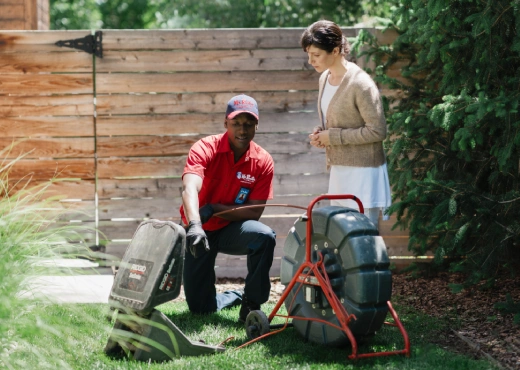
We start with a video camera inspection whenever the leak isn't visible on the surface. A small camera runs through the line while a signal receiver above ground tracks its exact position, so we know within a foot or two where the damaged section sits. This matters most with slab leaks and sewer line leaks, where the alternative is opening up flooring in three or four places just to find the source.
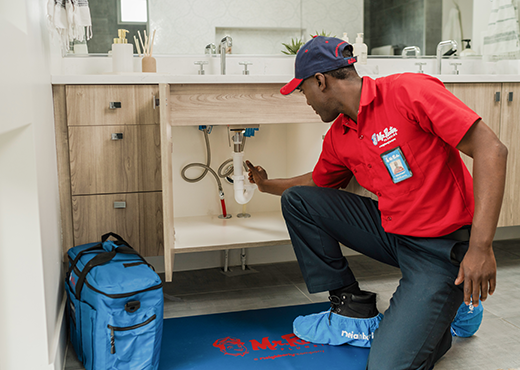
It's a non-invasive technique that saves homeowners from unnecessary demolition, and it tells us the pipe material, age, and condition at the same time. For fixtures and exposed lines, the process is a lot simpler. A leaky faucet usually points to a worn cartridge valve. A leaky showerhead often means a failed valve behind the tile, though sometimes it's the pipe itself. Either way, we're not tearing into walls to confirm a diagnosis we can already see or hear.
Once we've located the leak, the repair depends on what we find. A short section of corroded cast iron pipe might only need a spot repair. A slab leak sometimes calls for re-routing the water line above the slab or through the attic instead of tunneling underneath it, which cuts down on repair time and cost significantly. When a sewer line has multiple problem areas, trenchless sewer line repair replaces the damaged pipe sections through a small access point rather than trenching the entire yard. And if the plumbing throughout the house is old enough that leaks keep showing up in different spots every few months, whole-home repiping stops the cycle instead of treating each leak as a one-off.
Water pressure matters here too, and it's a step many quick fixes skip. Too-high pressure strains every joint and fitting in the house, and it's a common reason restored pipes fail a year or two after a repair. A thorough leaking pipe repair includes checking pressure at the meter and installing a regulator if it's running higher than it should. Skipping that step means fixing the same leak twice, sometimes in the same spot.
Frozen pipes add their own wrinkle during a hard winter freeze. Dallas doesn't see the kind of sustained cold that Northern cities plan for, so many homes have exposed hose bibs and thin insulation in attics and garages. When temperatures drop into the low 20s for more than a night, uninsulated lines can freeze, and the joints are usually where they burst once the ice thaws and pressure surges through. Draining outdoor hoses, covering exposed bibs, and insulating pipes in unheated spaces before the first freeze warning goes a long way toward avoiding an emergency call altogether.
Sweating pipes get lumped in with leaks more often than they should. High humidity means the water inside a cold line is often much cooler than the air surrounding it, and that temperature gap causes condensation to bead up on the outside of the pipe, the same way a cold glass of tea sweats on a summer afternoon. Running a dehumidifier in the area for a day is usually enough to tell the difference. If the moisture disappears, it was condensation. If it keeps coming back no matter how dry the air gets, something's actually leaking.
Cost is always part of the conversation, and we'd rather be upfront about it than let a homeowner guess. A leaky faucet or a fitting repair might run somewhere in the low hundreds. A slab leak with rerouting, a section of trenchless sewer line repair, or a broader repiping project costs more because of the labor and materials involved, but we write out every estimate with line items before any work starts. Nobody should have to sign off on a number they don't understand.
Licensed, insured plumbers handle every job, and we walk through the diagnosis with you in plain language before touching a wrench, not just after the invoice is written.